
Wholesale, Lab-Grown
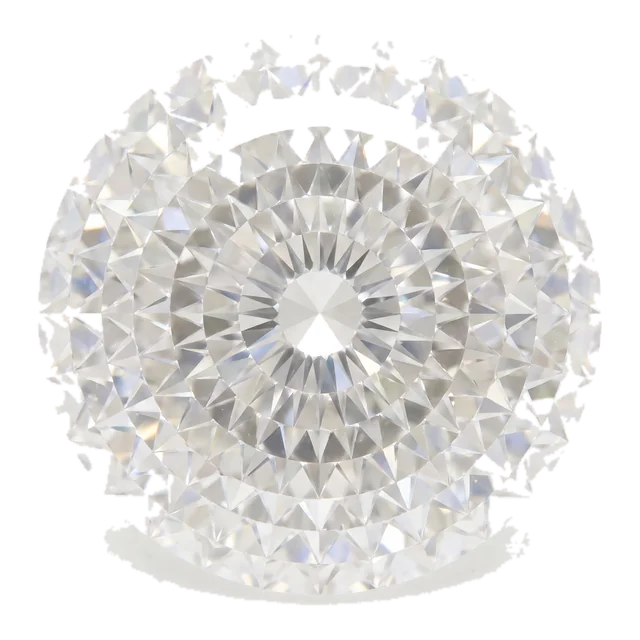
Wholesale Portuguese Cut Diamonds
Natural and lab-grown are two separate lines here, never mixed on one certificate or one price list.
Portuguese cuts pack rows of small triangular facets around the crown and pavilion, far more than a standard brilliant carries. The result is a dense, layered pattern that looks less like sparkle and more like a lit honeycomb. It is a cut you notice from across a table.
It has been common in colored stones for decades and rare in diamond, for a simple reason. All those extra facets take cutting time and eat weight, which was hard to justify on natural rough. Lab-grown material changed that arithmetic, and the cut has started appearing at wholesale in real quantities.
We hold over 40 Portuguese cut diamonds, all lab-grown. This is a designer and statement-piece shelf rather than a bridal one, and it is one of the smaller, more unusual positions we carry. Outlines are typically round.
Buying Portuguese Diamonds Wholesale
This cut needs size. The pattern comes from many concentric facet rows, and below about a carat those rows get too small to read as anything but general glitter. If a client wants the Portuguese look, put them in a larger stone or point them at a different cut, because a small one will not deliver what they saw.
Expect depth. Portuguese cuts carry substantial pavilions to fit the extra facet rows, which means the stone faces up smaller than its weight suggests. Compare millimeter spread to carat weight before quoting, and set the client's expectation on diameter rather than on carats.
Judge the concentric rows for evenness. Each ring of facets should be uniform in size all the way around, and the rings should stay concentric rather than drifting off center. Because the pattern is so regular, an error anywhere in it is immediately visible, which makes quality easy to assess from a good face-up image.
Each stone in this cut is lab-grown and comes with an IGI report in nearly every case. Clarity is more forgiving than in a step cut, since the facet density breaks up the field of view, but a centered dark inclusion still shows through the pattern.
Frequently Asked Questions
What is a Portuguese cut diamond?
A Portuguese cut is a high-facet-count cut with multiple concentric rows of small triangular facets on both the crown and the pavilion, giving a dense layered light pattern. It is far more common in colored gemstones than in diamond, and the diamond version is almost entirely a modern lab-grown product.
Why are Portuguese cut diamonds rare?
The extra facet rows cost cutting time and sacrifice weight, which rarely made sense on natural rough. Lab-grown material removed that constraint, so the cut is now available in diamond at prices that make it worth the labor. Our shelf of over 40 stones is entirely lab-grown.
What size Portuguese cut should I buy?
A carat and up, and larger is better. The cut's whole effect comes from many concentric facet rows, and in a small stone those rows compress until the pattern stops reading. This is also a deep cut, so it faces up smaller than its weight, which pushes the practical minimum higher still.
How do I buy Portuguese cuts wholesale?
Register a free trade account and sign in to see prices on every listing. This is a small specialty shelf, so if you have a size and quality in mind that is not currently showing, call the office and we will let you know what is available.
Related Shapes
Related reading: our diamond buying and grading guides.