
Wholesale, Natural & Lab-Grown
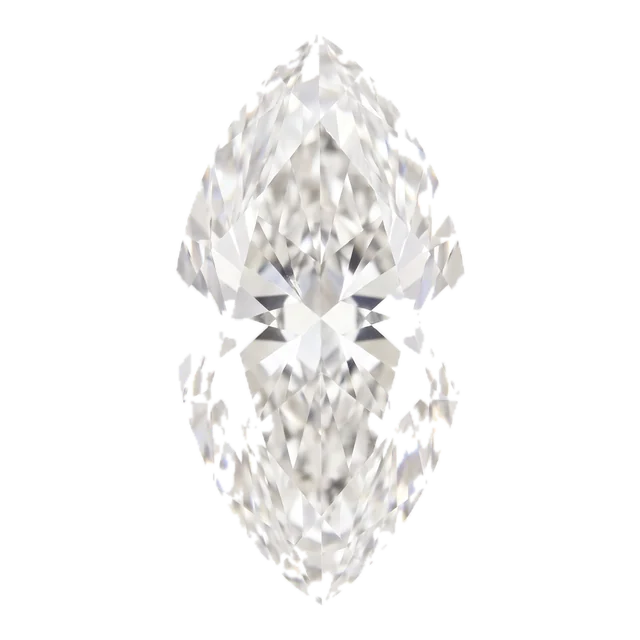
Wholesale Marquise Diamonds
Natural and lab-grown are two separate lines here, never mixed on one certificate or one price list.
Two points and a long belly. The marquise is the most efficient shape in the box for face-up size, because all of that length is spread across the top of the stone rather than buried in the pavilion. Carat for carat, nothing covers more finger.
It went quiet for two decades and came back hard. Designers reached for it first, north-south and east-west, in bezels and in clusters. Bridal followed. For a wholesale buyer that means demand is real but the retail comfort level varies by market, so it pays to know your accounts before you load up.
We hold over 1,700 lab-grown marquises and over 160 natural. The lab shelf is deep enough to shop by specification rather than by luck, including the small sizes designers use for petal and leaf work. Natural marquises are thinner and cluster in the one to two carat range.
Buying Marquise Diamonds Wholesale
The points are the whole risk. Check the plot for naturals, chips, or extra facets at either tip, and confirm the setter is planning V-prongs. A bare marquise point in a plain prong will eventually meet a door frame and lose. If a stone is discounted well below its group, look at the tips before you assume you found a deal.
Symmetry is easier to judge here than in any other fancy shape, because both halves have to agree. Hold the outline against its own mirror image. The two points should sit on the same axis, the widest part should fall dead center, and the wings should curve identically. A marquise that is off by a hair looks bent once it is set.
Bow-tie applies just as it does in an oval, and it tends to be stronger here because the stone is longer. Judge it on a moving video. Some shadow through the middle gives the stone contrast, but a black bar that will not move is a stone you will be taking back.
Reports split by line: natural marquises are almost all GIA and the lab stones almost all IGI. If you are matching a pair for earrings or a symmetrical bypass ring, work from the lab shelf, because every matched pair we stock today is lab-grown.
Length-to-Width Ratio
1.85 to 2.10 length to width is the classic marquise and the safest general buy.
Under 1.75 the stone looks stubby and loses the reason a client chose it.
Over 2.15 you get a dramatic, very long stone that photographs well and needs a careful setter, because the tips get thin as the outline stretches.
Frequently Asked Questions
What length to width ratio should a marquise be?
1.85 to 2.10 is the standard. That range gives the shape its recognizable silhouette without pushing the points to a fragile length. Shorter than 1.75 reads squat, longer than 2.15 is a designer look that needs protected tips.
Do marquise diamonds chip easily?
The points are vulnerable, the rest of the stone is not. Any marquise going into daily wear should be set with V-prongs covering both tips. Check the grading plot for existing chips or naturals at the points before you buy, since that is where damage is most often already present.
Are marquise diamonds cheaper than round diamonds?
Yes, per carat they run well below a comparable round. Cutting a marquise retains more of the original rough and demand is smaller than for round brilliants, so the price per carat lands lower. Combined with the large face-up size, it is one of the best value shapes on the board.
How do I buy marquise diamonds wholesale?
Open a trade account, which is free, and sign in to see pricing on every listing. Jewelers, designers, and other dealers all qualify. If you need a run of small marquises for petal work or side stones, call us rather than working the filters, because that kind of parcel is faster to build by hand.
Related Shapes
Related reading: Length to width ratios, the working guide.