
Wholesale, Natural & Lab-Grown
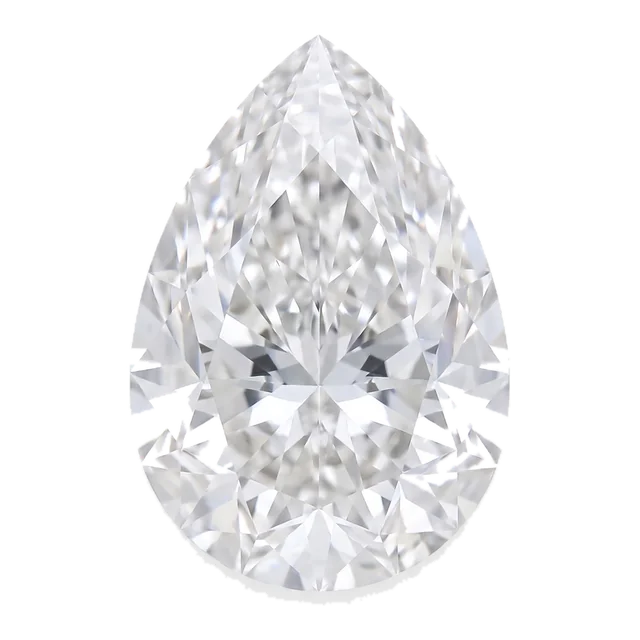
Wholesale Pear Shape Diamonds
Natural and lab-grown are two separate lines here, never mixed on one certificate or one price list.
A pear is half an oval and half a marquise. One rounded end, one point, and a silhouette that works pointing up the finger, hanging from an ear, or laid sideways in a designer piece. Very few shapes do that many jobs.
Wholesale demand comes from three directions at once. Bridal buyers want it as a center stone, earring makers want drops, and pendant work eats the smaller sizes steadily. That spread of demand is why the shape stays liquid even when bridal fashion swings somewhere else for a season.
There are over 1,600 lab-grown pears and over 160 natural pears available right now. The lab side covers the whole range from accent sizes up past three carats, so building a suite from one line is realistic. Natural pears sit mostly between one and two carats.
Buying Pear Diamonds Wholesale
Look at the shoulders before anything else. The curve leaving the rounded end should be full, not squared off. High shoulders make a pear look like a bell, flat shoulders make it look like a teardrop with a dent, and neither shows up anywhere on the report. This is a face-up judgment you make from the image.
The belly and the wings decide whether the outline reads clean. Run your eye from the point down each side to the widest part. Both sides should mirror each other, and the widest point should sit at the same height on both. An uneven belly is the most common flaw in cheap pears and the hardest to explain to a client after it is set.
Bow-tie is present in every pear and stronger in the elongated ones. Watch a video with the stone moving. Then check the point on the plot, because that tip carries the same chipping risk as a marquise and wants a V-prong or a bezel.
Certification runs GIA on the natural line and IGI on the lab line, almost without exception. For drop earrings, ask about matched pairs. All pairs in stock today are lab-grown, and buying an assembled pair saves the hours it takes to match two pears on outline as well as on color and clarity.
Length-to-Width Ratio
1.45 to 1.60 length to width is the classic pear and the easiest to sell into bridal.
1.65 to 1.75 gives the elongated drop that earring and pendant buyers prefer, since the extra length reads better hanging than sitting flat.
1.30 to 1.40 produces a wider, rounder pear that works well inside a halo or cluster where the outline is partly hidden anyway.
Frequently Asked Questions
What length to width ratio should a pear shape diamond be?
1.45 to 1.60 is the standard range for a ring. Elongate to 1.65 or 1.75 for earrings and pendants, where the stone hangs and the extra length reads well. Go wider, around 1.30 to 1.40, only for halo and cluster work.
How do you tell a good pear shape from a bad one?
Judge the outline, not the grades. The shoulders should curve fully out of the rounded end, both wings should mirror each other, and the widest point should sit at the same height on both sides. None of that appears on a grading report, so you check it from a straight-on face-up image.
Do you have matched pairs of pear shape diamonds?
Yes, and every pair currently in stock is lab-grown. Pairs are listed as pairs rather than as two singles, already matched on weight, color, clarity, and outline. A natural pear pair has to be assembled by hand from singles, which we can do on request.
Can I order pear diamonds wholesale from outside Los Angeles?
Yes. We ship to trade accounts anywhere we can ship insured, and the whole catalog is online. Create a free account to see prices, then order from the listing or call if you want the stones pulled and checked against a specific setting before they leave.
Related Shapes
Related reading: Length to width ratios, the working guide.