
Wholesale, Natural & Lab-Grown
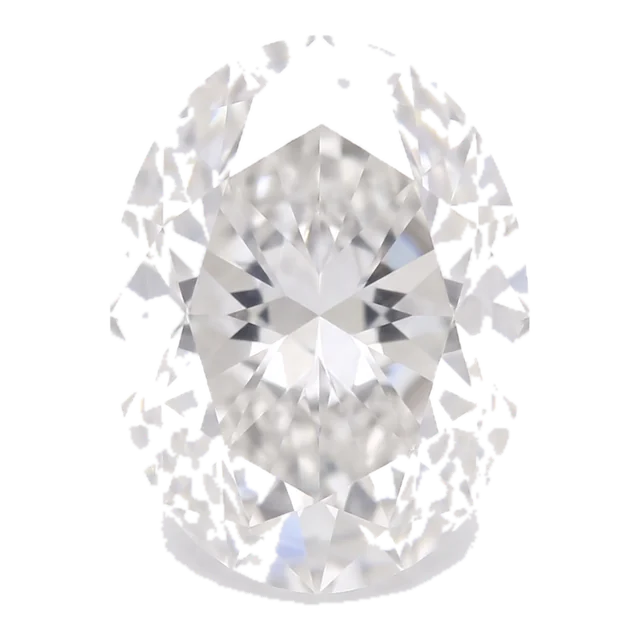
Wholesale Oval Diamonds
Natural and lab-grown are two separate lines here, never mixed on one certificate or one price list.
An oval is a brilliant cut pulled long. Same facet family as a round, different outline, and a face-up size that beats a round of equal weight. That last part is what sells it. A 1.50 oval covers more finger than a 1.50 round, and every retail client notices.
Ovals have been the strongest fancy shape in bridal for several years running, and the wholesale demand follows the counter. Jewelers restock them faster than any other fancy. Designers like them because the long axis gives room for east-west settings, bezels, and side stone work that a round cannot carry.
We hold nearly 500 natural ovals and over 3,000 lab-grown ovals right now. Over 1,100 of the lab ovals are three carats and up, which is where most of the large-stone demand sits. On the natural line, 137 stones fall right around one carat, so the everyday restock size is covered without a special order.
Buying Oval Diamonds Wholesale
Bow-tie first. Every oval has one, and no grading report mentions it. A faint shadow across the center is normal and disappears in wear. A hard black bar that stays put while the stone rocks is a defect you will be arguing about with your client later. Watch the video with the stone moving, not the still photo.
After the bow-tie, look at the outline. High shoulders make an oval look pinched, flat wings make it look like a stretched cushion, and neither shows up in a grade. The curve from the widest point down to each end should run smooth. Ask for a face-up image large enough to see the shape rather than the sparkle.
Depth and table drive how much of the weight you actually see. Two 2.00 ovals of the same color and clarity can measure a full millimeter apart in length, and the longer one is the one that sells. Buy on measurements as much as on weight.
Certification splits by line. Our natural ovals are overwhelmingly GIA graded and the lab ovals are overwhelmingly IGI graded. For earrings, note that every matched pair we currently stock is lab-grown, so a natural oval pair has to be built stone by stone from singles.
Length-to-Width Ratio
Length to width between 1.35 and 1.50 is the commercial band. That is what most jewelers ask for and what sets cleanly into standard heads.
Below 1.30 an oval starts reading round in a setting, which frustrates a client who chose an oval on purpose. Above 1.55 you are into the long ovals that designers hunt for. They photograph beautifully, they cover the most finger per carat, and they are the hardest to match if the client later wants a pair.
Frequently Asked Questions
What length to width ratio should an oval diamond be?
Aim for 1.35 to 1.50 for general retail. That range looks unmistakably oval, sits in standard settings, and is the easiest to resell. Go to 1.55 and above only when the client specifically wants an elongated look, and stay above 1.30 unless you want the stone mistaken for a round.
What is a bow-tie in an oval diamond?
A bow-tie is the dark band across the center of an elongated brilliant caused by the stone shadowing itself. Every oval has one to some degree, and no lab grades it. Judge it on video with the stone in motion, and reject any stone where the dark band holds still and reads black.
Do you have natural oval diamonds around one carat?
Yes, 137 natural ovals in stock sit right around the one carat mark. That band is the fastest mover on the natural line, so it turns over often. Check the live list before you assume a specific color and clarity combination is gone.
Are your lab-grown ovals certified?
Nearly all of them carry IGI reports. Our natural ovals run almost entirely on GIA. Every stone links to its own report from its listing page, so you can pull the grading before you commit to anything.
How do I see wholesale prices on ovals?
Create a free trade account and sign in. Pricing is hidden from the public catalog and visible on every listing once you are logged in. Jewelers, designers, and dealers all qualify, and larger buys or a parcel across a size range can be quoted by phone.
Related Shapes
Related reading: Length to width ratios, the working guide.