
Wholesale, Lab-Grown
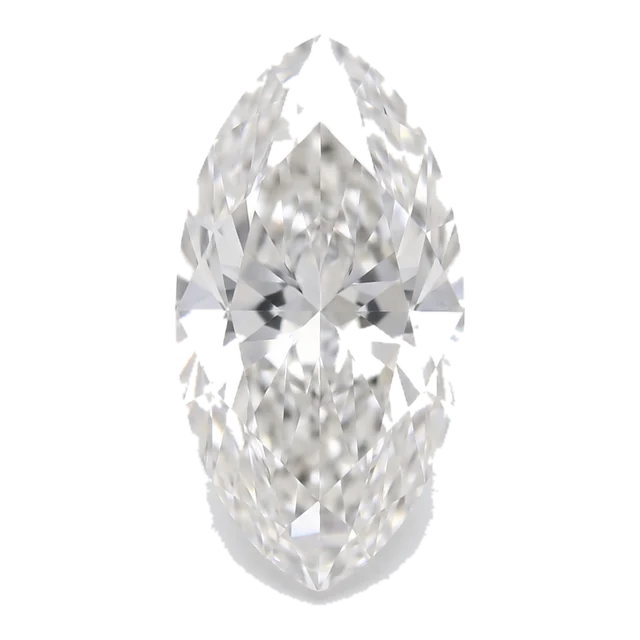
Wholesale Moval Diamonds
Natural and lab-grown are two separate lines here, never mixed on one certificate or one price list.
Somewhere between a marquise and an oval sits the moval. It keeps the full body of an oval but pulls each end into a soft, subtle point instead of a rounded curve. From a distance it reads as an oval with attitude. Up close you can see the ends taper.
Designers found this shape first, and it still sells largely to that audience. It gives a custom house something recognizable but not identical to what every other jeweler has in the case, and the tapered ends make bezel and east-west settings look intentional rather than plain.
Movals barely exist in natural production, so the entire shelf here is lab-grown. We hold over 350 of them, with over 200 at three carats and up. That is a real position for a shape most dealers cannot quote at all, and it is why designers working on larger center stones come here for it.
Buying Moval Diamonds Wholesale
The points define the shape, so judge them first. They should be soft and rounded rather than sharp like a marquise, and both ends should taper at the same rate. A moval with one blunt end and one crisp end reads as a mistake, not a style. Look at a straight-on image before you look at anything else.
Bow-tie behaves the same as it does in ovals and marquises, and the longer stones show it more. Watch a video with the stone in motion. Because the ends are narrower than an oval's, the shadow tends to sit tighter through the center, which can read as contrast or as a dark bar depending on how the pavilion was cut.
Setting takes a conversation. A moval will not sit correctly in a stock oval head, and the ends are too soft for standard V-prongs made for marquises. Most of these end up in bezels or in custom heads, so confirm the setting plan before you commit a client to the shape.
The whole shelf is lab-grown and graded almost entirely by IGI. Matched pairs are available in lab-grown material, which is the only way to get two movals that agree on point taper as well as on grade.
Length-to-Width Ratio
Most movals run 1.50 to 1.75 length to width, longer than a standard oval and well short of a marquise.
Below 1.45 the taper stops registering and the stone just looks like an oval that was cut carelessly at the ends.
Above 1.85 you are effectively selling a soft marquise, which is fine if that is the intent but should be described that way to the client.
Frequently Asked Questions
What is a moval diamond?
A moval is a hybrid between a marquise and an oval, with an oval body and gently tapered ends instead of fully rounded ones. It reads as an oval at a glance and shows its pointed ends up close. The shape is almost exclusively a modern lab-grown cut and is popular with custom designers.
Can you get natural moval diamonds?
Not in any practical quantity. Moval is a modern cutting style and natural production of it is effectively nonexistent, so every moval we carry is lab-grown. If a client wants a natural stone with a similar silhouette, an elongated oval is the closest realistic substitute.
What length to width ratio suits a moval?
1.50 to 1.75 is the working range. That is long enough for the tapered ends to show and short enough that the stone still reads as an oval variant rather than a marquise. Shorter than 1.45 and the taper disappears.
Do movals need a custom setting?
Usually yes. Stock oval heads leave the tapered ends unsupported and marquise V-prongs are shaped for a sharper point. Bezels and custom heads are the normal answer. Sort the setting before you sell the stone, since this catches setters off guard more than any other shape on our floor.
How do I see prices on movals?
Register a free trade account and sign in, and pricing appears on every listing. We supply the trade only. For larger movals or a matched pair, call the office and we will check what is on hand and what is arriving.
Related Shapes
Related reading: our diamond buying and grading guides.