
GIA and IGI, the real-world split
Natural stock comes on GIA papers. Lab-grown comes on IGI. Here is how the market ended up that way and what to check on either report.
Key takeaways
- GIA grades the overwhelming majority of natural wholesale stock. IGI grades the overwhelming majority of lab-grown.
- That split is how the two markets clear, not a judgement about either laboratory.
- Grades do not transfer between labs. Compare stones graded by the same lab and never price across two reports as if the grades were interchangeable.
- A report describes a stone. It is not an appraisal, and no lab grades the outline of a fancy shape, which is why video matters on every fancy you buy.
- Verify in six steps: pull the report from the lab’s own site, read the girdle inscription, measure the stone, check the plot, read the comments, and on lab-grown confirm the report and the inscription both say laboratory grown.

Jewelers ask us which lab is better. The more useful question is which lab you are actually going to be handed, because on a wholesale shelf that is largely decided before you start shopping.
Which lab grades natural wholesale stock?
GIA grades the overwhelming majority of natural wholesale stock. On our own natural line it is not close: the shelf is almost entirely GIA papers, with everything else a rounding error.
That is not a house policy, it is how the natural market clears. A natural stone with a GIA report sells faster and trades more easily at every point in the pipeline, so cutters send the goods worth grading to GIA and the market prices anything else at a discount. If you are buying a natural stone of real value and the paper is from a lab you have never heard of, that discount is telling you something.
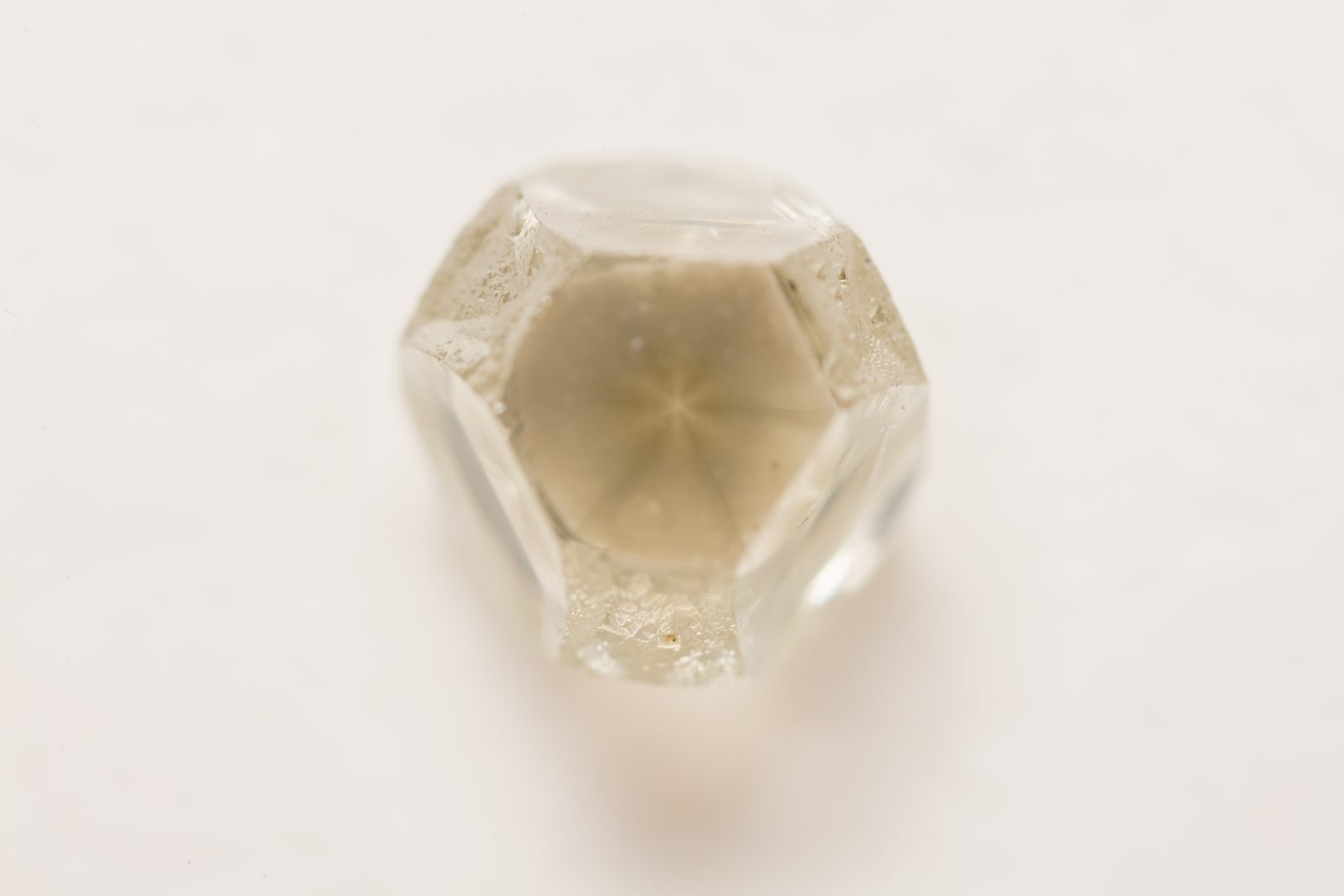
Which lab grades lab-grown stock?
IGI grades the overwhelming majority of lab-grown stock. Our lab-grown line runs into the thousands of stones and it is effectively an IGI shelf, with GIA papers appearing on a small fraction.
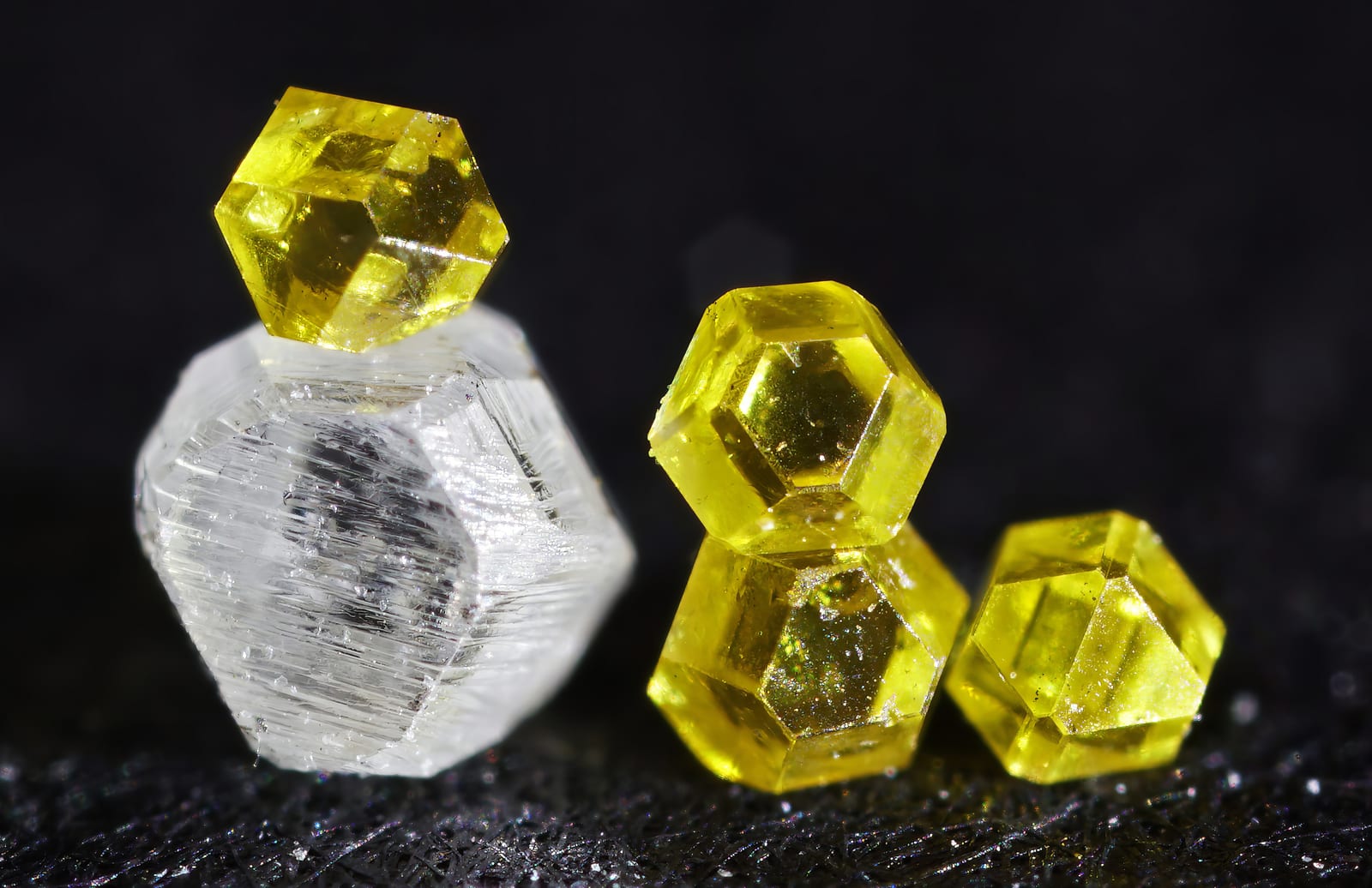
The reason is simple volume and logistics. Lab-grown production scaled up fast and needed a grading partner that could take that throughput in the cutting centers where the goods actually are. IGI built for it. GIA grades lab-grown too, and does it well, but far fewer stones come through that way, so if you insist on GIA paper for lab-grown you are shopping a small slice of a very large market and paying for the privilege.
| GIA | IGI | |
|---|---|---|
| Grades | The overwhelming majority of natural wholesale stock. | The overwhelming majority of lab-grown stock. |
| Our shelf | Almost entirely GIA papers on the natural line. | Effectively an IGI shelf on the lab-grown line, with GIA papers on a small fraction. |
| Why | A natural stone with a GIA report sells faster and trades more easily at every point in the pipeline. | Lab-grown production scaled up fast and needed a grading partner that could take that throughput in the cutting centers. |
| Reputation | Historically the stricter, more consistent grader on natural goods, which is why the natural market standardized on it. | Also grades lab-grown well. Far fewer lab-grown stones come through GIA. |
Does that mean IGI is the lesser lab?
No. It means the two labs occupy different parts of the market, and comparing them as if they graded the same goods is the mistake. The fair criticism of cross-lab comparison is real, though, and every experienced dealer will tell you the same thing: grades do not transfer between labs. A stone graded G VS1 by one lab is not automatically the same stone another lab would call G VS1. Historically GIA has been the stricter and more consistent grader on natural goods, which is exactly why the natural market standardized on it.
A stone graded G VS1 by one lab is not automatically the same stone another lab would call G VS1.
The practical rule: compare stones graded by the same lab against each other, and never build a price comparison across two different labs' papers as if the grades were interchangeable. That single habit will save you more money than any negotiation tactic.
What does a report actually cover?
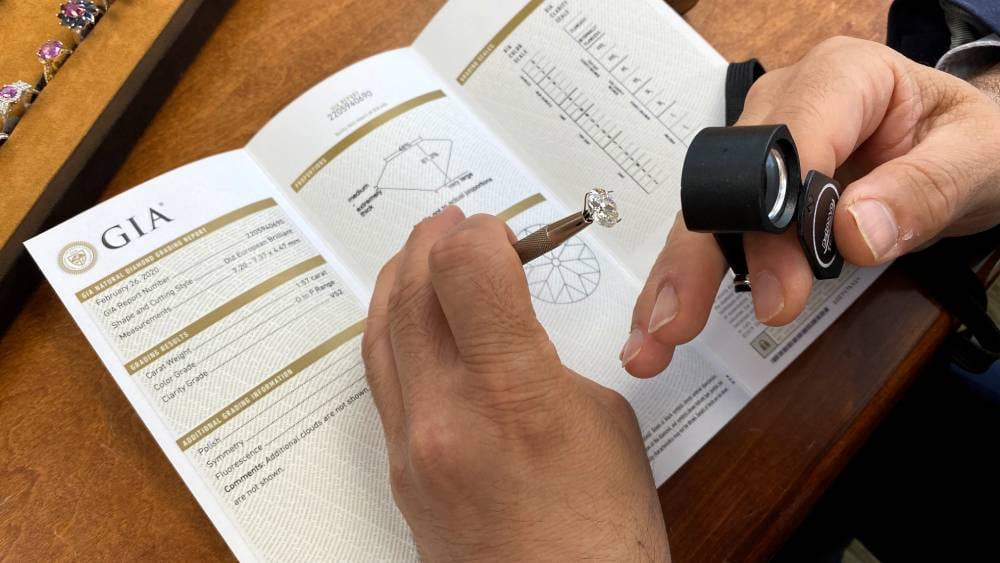
A grading report describes the stone: carat weight, measurements, shape and cutting style, color, clarity, and for rounds a cut grade, plus polish, symmetry, fluorescence, a plotted diagram of the clarity characteristics, and a comments section. On a lab-grown stone the report also states plainly that it is laboratory grown and names the growth method.
What a report is not
It is not an appraisal, so it carries no value, and any paper that quotes you a retail price is a sales document wearing a lab coat. And it is not a judgment of the outline of a fancy shape. No lab grades whether an oval has a bow tie or whether the shoulders are full. Cut grades exist for rounds; for fancies you get polish and symmetry, which are not the same thing at all. That gap is exactly why video matters on every fancy shape you buy.
What should you verify on either report?
Verify the report against the stone in your hand, in this order. It takes about three minutes and it is the whole defense.
- Pull the report yourself from the lab's own site. Type the report number into the lab's report check page. Do not rely on the PDF you were emailed, and do not rely on a screenshot. PDFs get edited.
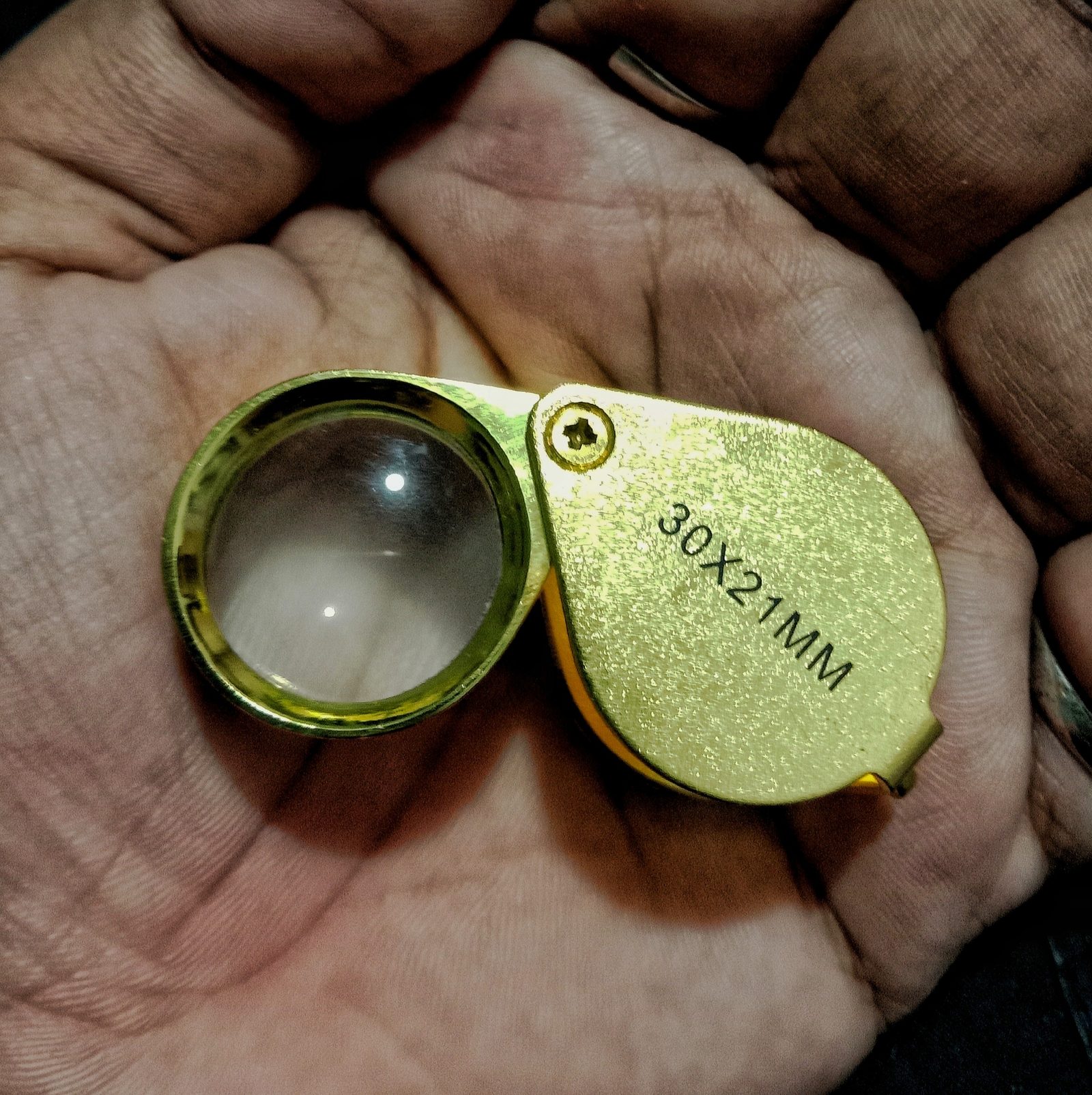
- Read the girdle inscription under the loupe and confirm it matches the report number. Both labs inscribe. A stone whose inscription does not match its paper is not a paperwork problem, it is a different stone.
- Measure it. Weight and millimeter measurements should tie to the report within a hair. This is the fastest way to catch a swapped stone.
- Check the plot against what you see. Find one or two of the plotted inclusions under magnification. If the plot shows a crystal under the table and you cannot find it, stop.
- Read the comments section. This is where clarity treatments, laser drilling, and other disclosures live, and it is the part everybody skips.
- On lab-grown, confirm the report says laboratory grown on its face, and confirm the inscription does too. Both labs are explicit about this. Anything vague is a reason to walk.
What should you tell your own customer?
Tell them which lab, and tell them why. A retail customer who has been reading online arrives believing GIA is the only real lab and that anything else is a fake certificate. That is wrong, but it is the belief you are selling against, so meet it head on: natural stones come on GIA papers because that is what the natural market runs on, and lab-grown stones come on IGI papers because that is what the lab-grown market runs on. Both are independent laboratories. Neither one is the seller.
And say the sentence out loud that protects you later: this is a laboratory grown diamond, or this is a natural diamond. Written on the invoice, not just spoken. It costs nothing today and it is the only thing that matters if a stone comes back in five years.
Every stone we list carries its report number, and on the natural side that means GIA on nearly everything from a round to an emerald cut. Check the number against the lab before you pay us, not after. We would rather you did. Browse the inventory and pull a report at random. That is the point of publishing them.
Frequently asked questions
Is GIA better than IGI?
They largely grade different goods, so the comparison is the wrong question. GIA grades most natural wholesale stock and has historically been the stricter, more consistent grader on natural, which is why the natural market standardised on it. IGI grades most lab-grown. Both are independent laboratories and neither one is the seller.
Why is lab-grown certified by IGI and not GIA?
Volume and logistics. Lab-grown production scaled fast and needed a grading partner able to take that throughput in the cutting centres where the goods actually are. GIA grades lab-grown too, and does it well, but far fewer stones come through that way, so insisting on GIA paper for lab-grown means shopping a thin slice and paying for it.
Can I compare a GIA G VS1 with an IGI G VS1?
No. Grades do not transfer between labs, so those two are not automatically the same stone. Build every price comparison inside one lab’s papers. That single habit saves more money than any negotiation tactic.
How do I verify a diamond certificate?
Type the report number into the laboratory’s own report check page rather than trusting an emailed PDF, then read the girdle inscription under a loupe and confirm it matches. Measure the stone against the report, find one or two plotted inclusions, and read the comments section, where treatments and laser drilling are disclosed.
What does a grading report not tell me?
It carries no value, so it is not an appraisal, and any paper quoting a retail price is a sales document. It also says nothing about the outline of a fancy shape: no lab grades whether an oval has a bow tie or whether the shoulders are full. Cut grades exist for rounds; fancies get polish and symmetry, which is not the same thing.
Sources
- Photo: "Diamond" by Auckland Museum Collections, CC BY 2.0, via Wikimedia Commons (Flickr), resized
- Photo: "A jeweller’s loupe" by Billjones94, CC BY-SA 4.0, via Wikimedia Commons, resized
- Photo: Loose diamond inspected against its GIA grading report, Estate Diamond Jewelry
- Photo: "Diamonds7" by Bilovitskiy, CC BY 4.0, via Wikimedia Commons, resized
Related reading


HV Diamonds is a wholesale loose diamond dealer in Los Angeles. Natural and lab-grown are kept as separate lines. Prices show on every stone once you are signed in, and an account is free.
Need something that is not on the list? Call the office at 213-612-0324 or send a quote request with the shape, the size band and the deadline.