Long cushion and elongated cushion
Two names, one shelf, and a real supply problem behind them. What the terms mean in the trade and how a long cushion prices next to an oval.
Key takeaways
- Long cushion and elongated cushion mean the same thing in ordinary trade use. Order on the ratio band and the millimetres, never on the word.
- A long cushion is a cushion above about 1.20. Most demand sits between 1.25 and 1.40; past 1.50 the buyer pool narrows fast.
- Natural long cushions are scarce because cutting a cushion long costs the cutter weight, and the market pays roughly the same per carat either way.
- They price at or slightly under a comparable oval, and a thin category can flip that: price is set by whoever happens to be holding one.
- Check corner symmetry, the waist, the faceting style, the millimetre spread and the depth percentage before you buy one.

A jeweler calls and asks for an elongated cushion. Another calls the same afternoon and asks for a long cushion. Nine times out of ten they want the same stone. The tenth time they do not, and that is the call worth getting right.
What is a long cushion diamond?
A long cushion is a cushion cut whose length to width ratio is meaningfully above square, generally 1.20 and up. The outline keeps the soft rounded corners and pillow edges of a cushion, but it is stretched along one axis so it sits on a finger the way an oval does. For how that band sits among other shapes, see length to width ratios, the working guide.
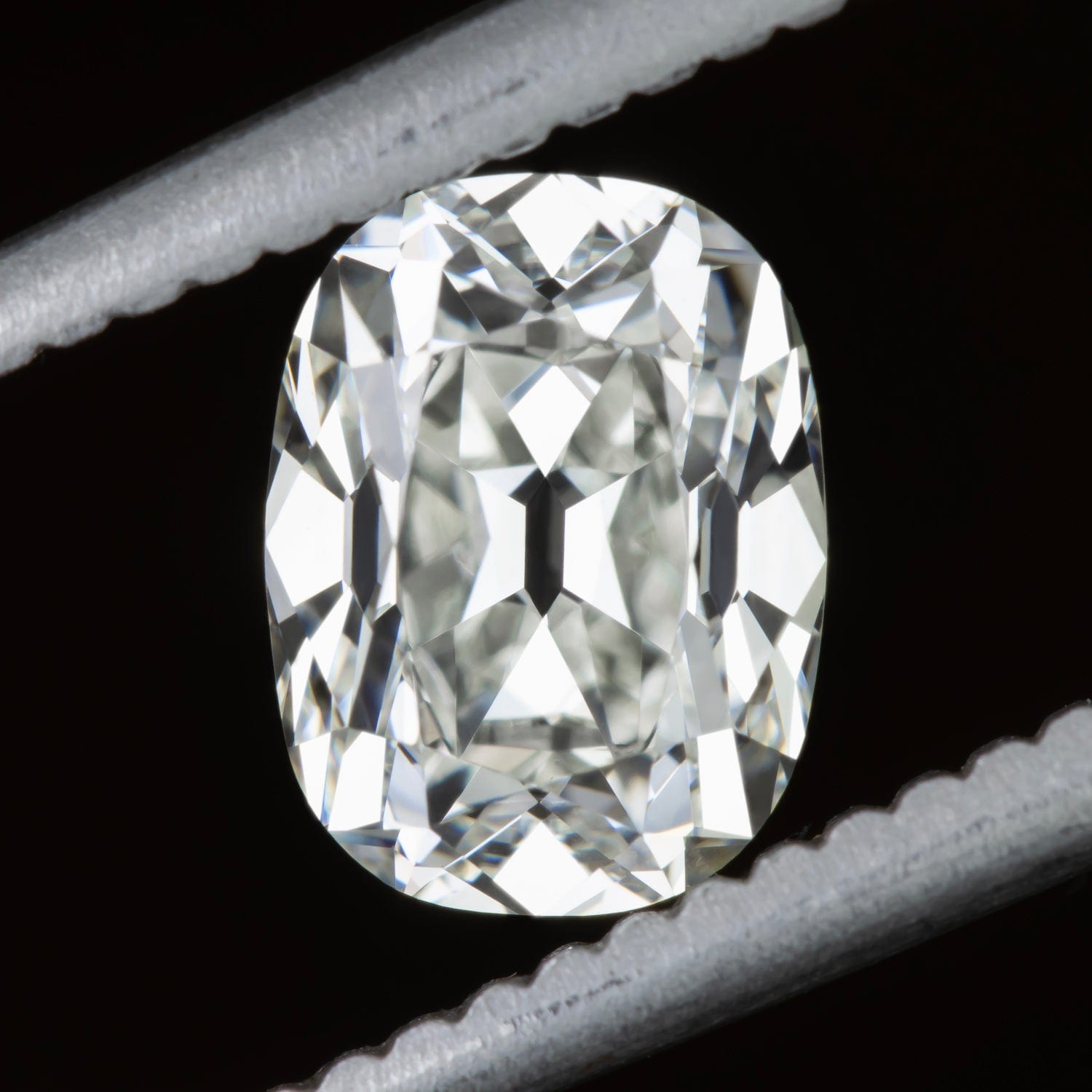
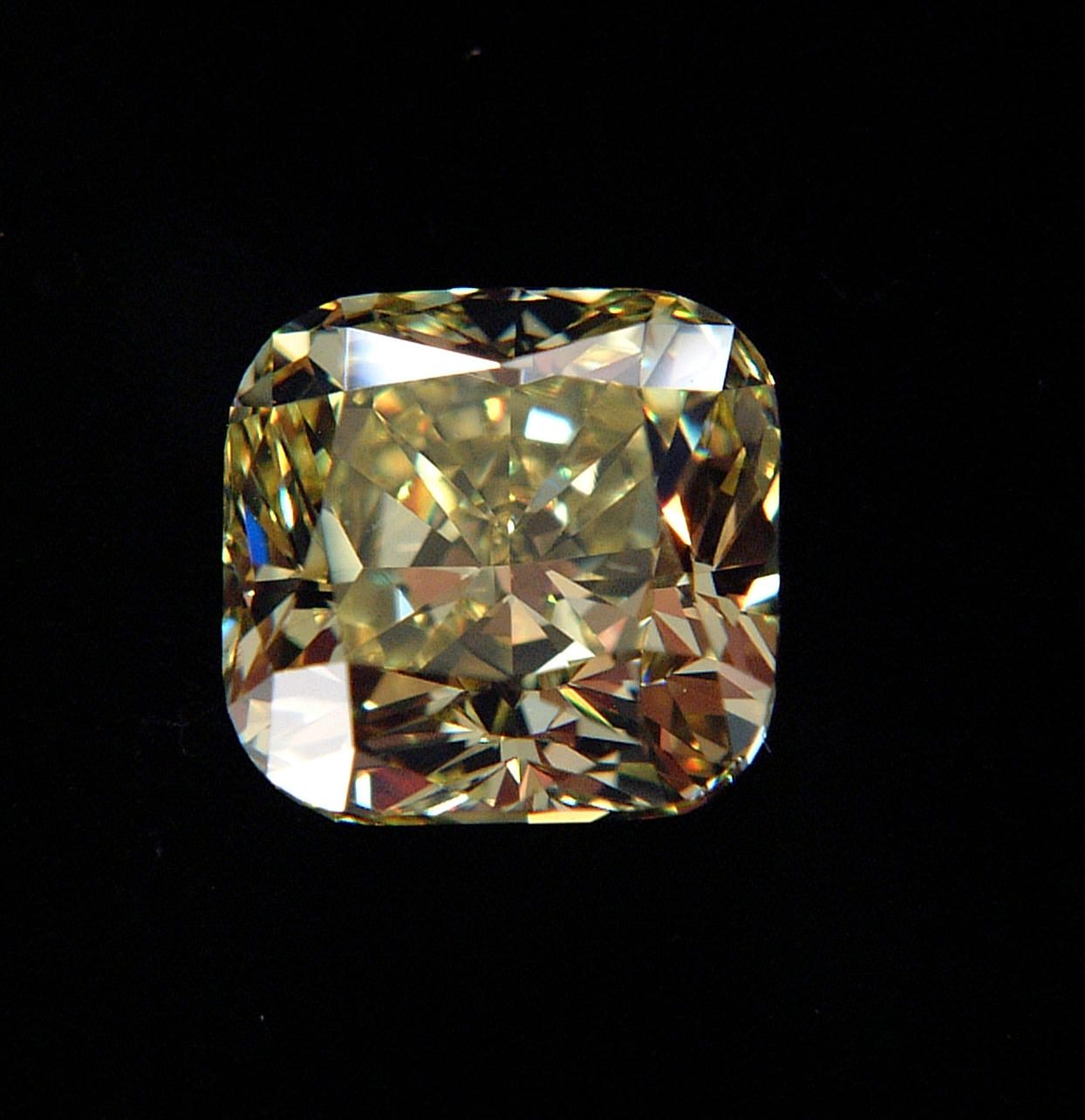
In practice most of the demand lands between 1.25 and 1.40. Past 1.50 the stone starts to read as its own thing, closer to a soft cornered radiant in silhouette, and the pool of buyers narrows fast.
Is elongated cushion the same as long cushion?
Yes, in ordinary trade use they are the same thing, and any dealer will search the same shelf for both. The difference is regional habit more than definition. Retail listings and newer designers tend to write elongated cushion because it describes the look to a consumer. Cutters, brokers and older dealers say long cushion, and a lot of feeds carry it as a separate shape code.
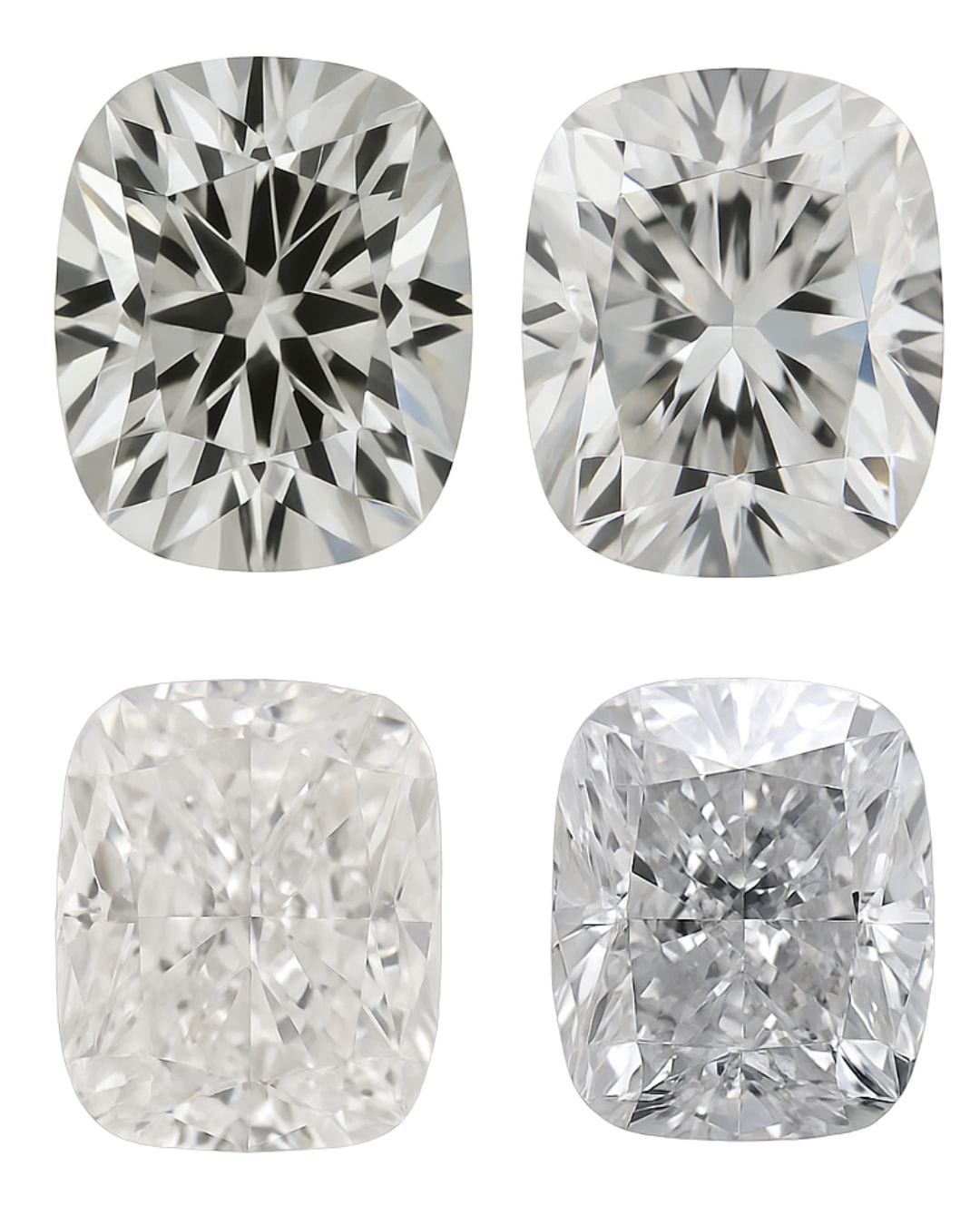
Where it does matter: some sellers use elongated cushion loosely for anything above 1.10, which is barely off square and will disappoint a customer who was shown a 1.35 in a photo. Do not order on the word. Order on the ratio band and the millimeter measurements. If you want 1.25 to 1.40, say 1.25 to 1.40, and the naming argument disappears.
Order on the ratio, not the name
Elongated cushion and long cushion mean the same thing in ordinary trade use. Some sellers use elongated cushion loosely for anything above 1.10, which will disappoint a customer shown a 1.35 in a photo. Give the ratio band and the millimeter measurements, and the naming argument disappears.
The other thing the word does not tell you is faceting. Cushions come crushed ice, with a scattered sparkle and a busy face, or chunky and faceted, with bigger flashes and a visible pattern. Both exist at every ratio. A jeweler who says elongated cushion and means chunky faceted, and gets crushed ice, will send it back. Say which one you want.
Why are natural long cushions scarce?
Because cutting a cushion long costs the cutter weight, and weight is what he gets paid for. Rough dictates the outcome. A cutter facing a piece of rough runs the yield, and in most cases the squarer cushion holds more carat weight than the stretched one out of the same stone. When the market pays roughly the same per carat for both, nobody cuts away a tenth of a carat for a ratio.
Stack that up over a whole production year and you get what you see on the market: plenty of square and near square natural cushions, and a thin, uneven supply of long ones. They get cut when the rough shape practically demands it, not because a planner sat down and decided to make long cushions this quarter.
When the market pays roughly the same per carat for both, nobody cuts away a tenth of a carat for a ratio.
The result on our own shelf is unusual and worth saying plainly. Our long cushions are all natural, and it is a small, hand picked selection rather than a deep run. Almost every other specialty outline in the market today skews lab-grown. This one goes the other way. We buy them when they show up, because when a designer needs one there is rarely a second stone behind it.
That scarcity changes how you should shop. On an oval you can hold out for the exact color and clarity you want because there is always another one next week. On a natural long cushion the right outline at the right weight may be one stone. Decide in advance which spec you will bend, because you will probably have to bend one.
How do long cushions price against ovals?
Long cushions generally price at or slightly under a comparable oval on a per carat basis, and the gap narrows as the stone gets rarer. Ovals are one of the deepest categories in the natural market. Depth means competition, and competition sets a tight price.
Three specifics behind that. First, cushions face up smaller than ovals at the same weight, because they carry more of their weight in the pavilion. A 2.00 oval and a 2.00 cushion do not look like the same size ring, so compare millimeters and not just carats before you compare price. Second, cushion clarity behaves differently. The soft corners and busy faceting of a crushed ice cushion hide inclusions, so an SI1 cushion can face up cleaner than an SI1 oval, and that is real money saved if your customer buys with their eyes rather than the paper. Third, scarcity flips the discount. Deep categories price efficiently. A thin category prices on whoever is holding one, which is why a good natural long cushion sometimes costs more than its oval equivalent rather than less.
| Long cushion | Oval | |
|---|---|---|
| Face-up size at the same weight | Smaller. Carries more of its weight in the pavilion. | Larger for the same carat weight. |
| Clarity behavior | Soft corners and busy faceting on a crushed ice cushion can hide inclusions, so an SI1 can face up cleaner. | Standard faceting; inclusions read more plainly. |
| Market depth | A thin category. Price is set by whoever happens to be holding one. | One of the deepest categories in the natural market. Competition sets a tight price. |
| Per carat price | At or slightly under a comparable oval, though the gap narrows as it gets rarer and can flip higher in a thin category. | Generally at or slightly above a comparable long cushion. |
What should you check before you buy one?
Look at the outline before you look at anything else. A long cushion goes wrong at the corners and the waist more than anywhere else.
- Corner symmetry. Four corners that do not match are obvious once the stone is set, and no report grade will flag it for you.
- Waist. Some long cushions pinch in the middle. On video it looks like a soft hourglass. It never improves after setting.
- Faceting style, stated out loud. Crushed ice or chunky. Ask, and get it in writing on the memo.
- Millimeter spread, not just weight. Two 1.50s at the same ratio can differ by a third of a millimeter in length, and your customer sees that.
- Depth percentage. Deep cushions hold weight you cannot see. If the spread looks small for the carat, that is why.
If you are matching one to an existing piece, send us the measurements you need rather than the carat weight. Fitting a long cushion into a setting cut for an oval is a millimeter problem, not a weight problem. You can see what is on the shelf today in our inventory, and if the outline you need is not there we will tell you straight rather than sell you a 1.12 and call it elongated.
Frequently asked questions
Is an elongated cushion the same as a long cushion?
Yes, in ordinary trade use, and any dealer will search the same shelf for both. The difference is habit: retail listings and newer designers write elongated cushion, while cutters and older dealers say long cushion. Some sellers stretch elongated cushion down to 1.10, so order on the ratio band rather than the name.
What ratio makes a cushion a long cushion?
Generally 1.20 and up, with most demand between 1.25 and 1.40. Past 1.50 the outline starts reading as its own thing, closer to a soft cornered radiant, and the pool of buyers narrows quickly.
Why are natural long cushions hard to find?
Because the squarer cushion usually holds more carat weight out of the same rough, and weight is what the cutter gets paid for. When the market pays roughly the same per carat for both, nobody cuts away a tenth of a carat for a ratio, so long cushions get cut when the rough demands it rather than on plan.
Do long cushions cost more or less than ovals?
Generally at or slightly under a comparable oval per carat, because ovals are one of the deepest and therefore most efficiently priced categories in natural. But scarcity flips it: a thin category prices on whoever is holding one, so a good natural long cushion sometimes costs more than its oval equivalent.
Crushed ice or chunky faceted, which cushion should I order?
Both exist at every ratio and they are different products, so say which one you want and get it on the memo. Crushed ice scatters the sparkle and hides inclusions, which can make an SI1 face up cleaner. Chunky faceting gives bigger flashes and a visible pattern.
Sources
Related reading


HV Diamonds is a wholesale loose diamond dealer in Los Angeles. Natural and lab-grown are kept as separate lines. Prices show on every stone once you are signed in, and an account is free.
Need something that is not on the list? Call the office at 213-612-0324 or send a quote request with the shape, the size band and the deadline.