
Melee diamonds, how to spec them so they match
Melee is sold by sieve and graded by parcel, which is exactly why it arrives looking a grade off. Here is the size table and the spec that prevents it.
Key takeaways
- Melee is sold by sieve range, so a parcel described as plus 2.00 minus 2.20 mm contains stones spanning that whole band.
- A parcel grade describes the group, not any single stone, which is the mechanical reason melee reads a grade lower on arrival than it did on memo.
- Spec a millimeter range, a color range, a clarity range, a cut standard and a stone count, and put all five in writing.
- Ask for calibrated stones, cut to a target within roughly 0.02 to 0.05 mm, whenever the melee sits in a channel or a shared prong row.
- Weigh and count the parcel the day it arrives, against the packing note, before a single stone leaves the paper.

Melee is the part of an order nobody photographs and everybody argues about. The center stone comes with a report and a report number. The melee comes in a folded paper with a handwritten range on the outside, and whether it matches is decided by how the order was written, not by how carefully you inspect it afterward.
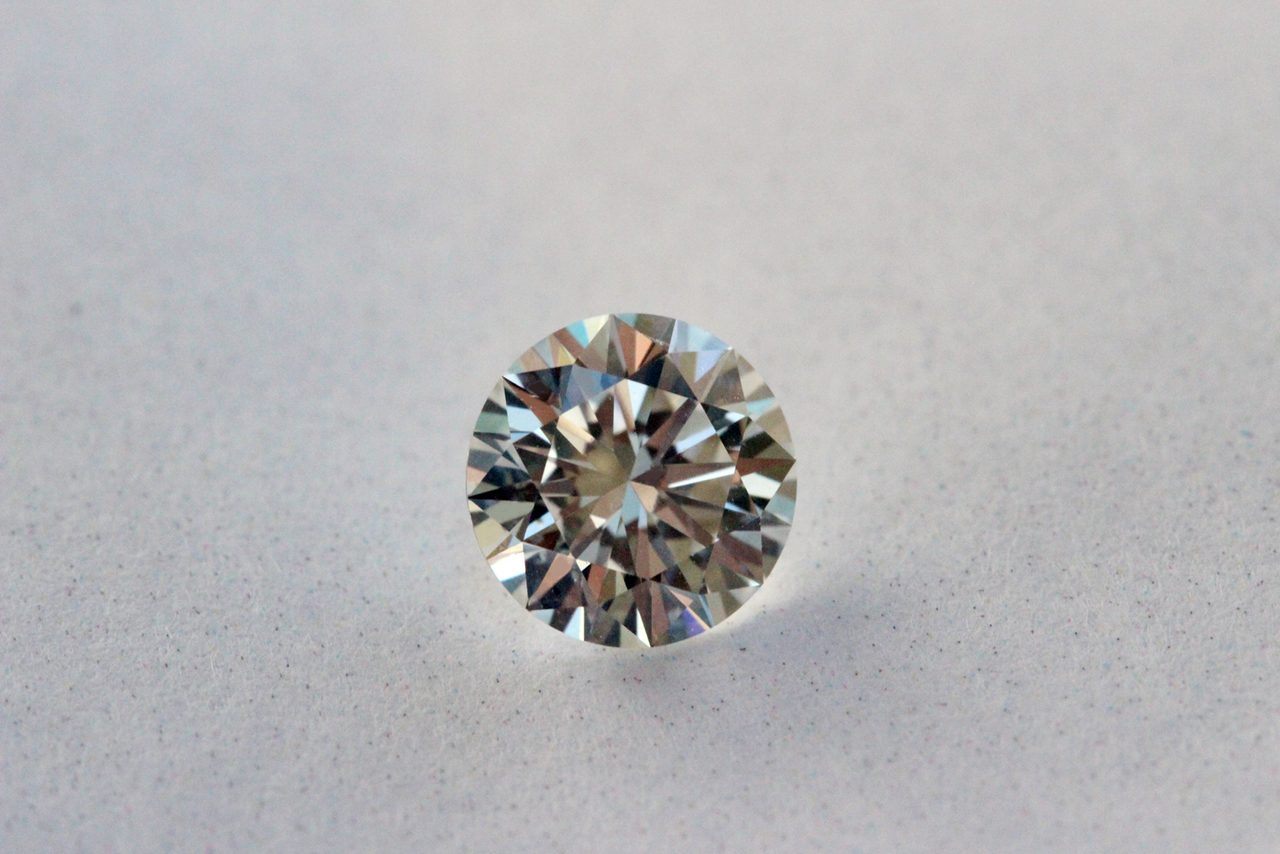
What is a melee sieve size, and how does it relate to millimeters?
A sieve size is a band, not a measurement. Melee is poured across plates of graduated holes. Whatever falls through the larger plate and is held by the smaller one becomes the parcel, quoted as a plus and a minus: plus 2.00 minus 2.20 mm.
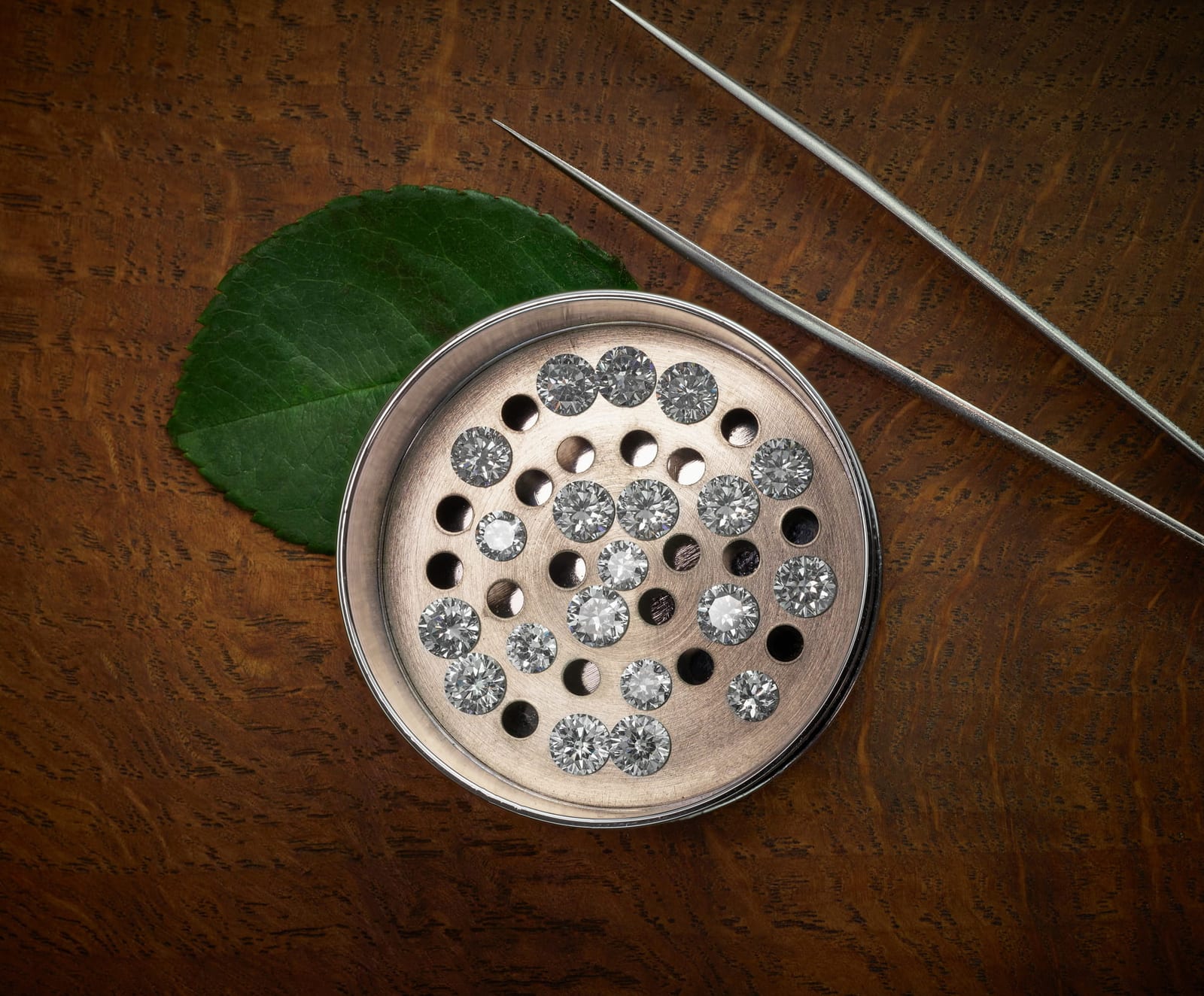
Plate numbering is not universal. Different houses use different sieve number systems, so always ask for the millimeters rather than accepting a sieve number on its own. The millimeter figure is the only one that travels.
Weight follows the cube of the diameter, which is why small changes in millimeters move the stone count so sharply. These are the round brilliant figures the trade works from.
| Diameter | Approx. weight each | Stones per carat |
|---|---|---|
| 1.00 mm | 0.005 ct | about 200 |
| 1.30 mm | 0.010 ct | about 100 |
| 1.50 mm | 0.015 ct | about 67 |
| 1.70 mm | 0.020 ct | about 50 |
| 2.00 mm | 0.030 ct | about 33 |
| 2.20 mm | 0.040 ct | about 25 |
| 2.50 mm | 0.060 ct | about 17 |
| 2.90 mm | 0.100 ct | about 10 |
| 3.40 mm | 0.150 ct | about 7 |
| 3.80 mm | 0.200 ct | about 5 |
Why does melee drop a grade between the memo and the delivery?
Because a parcel is graded as a group and the group does not stay still. Nobody grades a 1.5 mm stone individually. A supplier assigns a range to a parcel, and that range follows the paper even as stones are pulled out of it for other jobs.
Three things compound it. Parcels get combined when stock runs low, so a G to H parcel absorbs an I to J parcel and the label does not change. Stones get picked, and the best ones go first, so what is left drifts down. And the parcel is described under the supplier's light, which is not your light.
None of that is necessarily dishonest. It is what happens when goods are sold by range. The defense is to narrow the range in writing before the parcel ships, not to argue about it afterward.
How should you write a melee spec?
Five fields, every time, in the order below. A spec with all five gets filled or rejected honestly. A spec that says two millimeter white melee gets whatever is nearest the front of the safe.
- Size. Millimeter range, not a sieve number. Say plus 1.95 minus 2.05 mm if you need it tight.
- Color. A two grade band at most, and name the floor. G to H, floor H.
- Clarity. VS or better, or eye clean SI, and say which one you mean at the size you are setting.
- Cut standard. Good make, no fisheyes, no open culets, symmetry good enough to sit level in a row.
- Count and weight. Both. Say 42 stones, approximately 1.26 ct total, and state which one governs if they disagree.
Add one line about origin if it matters. Natural and lab-grown melee cannot be mixed in one parcel without disclosure, and mixing them in one piece has its own rules, covered in mixing lab-grown and natural in one piece.
Calibrated or assorted: which do you need?
Calibrated for anything that has to sit level in a row. Channel settings, shared prong rows and eternity bands need stones cut to a target within roughly 0.02 to 0.05 mm. Assorted melee, sieved into a band, is fine for scattered pave and cluster work.
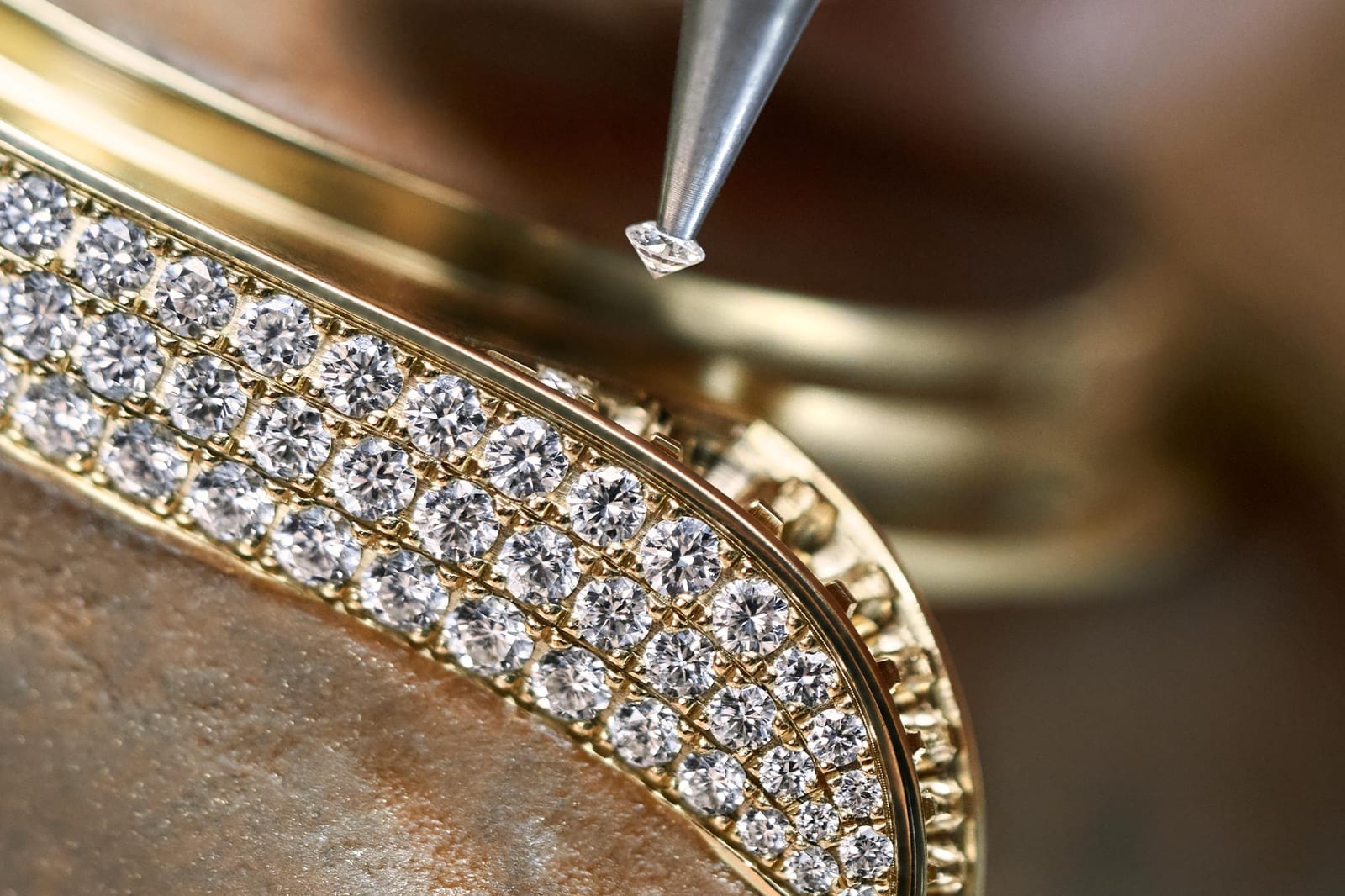
Calibrated goods cost more per carat and take longer to source, because somebody had to cut to a number rather than to yield. That premium buys you a bench that does not have to sort stones one at a time.
Fancy shape melee is nearly always a calibrated conversation. Small french cuts, princess melee and step cut accents have to agree on two dimensions rather than one, and matching them is closer to matching a pair than to buying a parcel.
How do you check a parcel when it arrives?
Weigh it, count it, then grade a sample, before anything leaves the paper. The whole check takes about ten minutes and it is the only window in which a discrepancy is clearly the supplier's and not yours.
Weigh the parcel on a scale that reads to 0.001 ct and compare it to the packing note. Count the stones. A parcel that is right on weight and light on count contains larger stones than you ordered, which is a fitting problem waiting to happen.
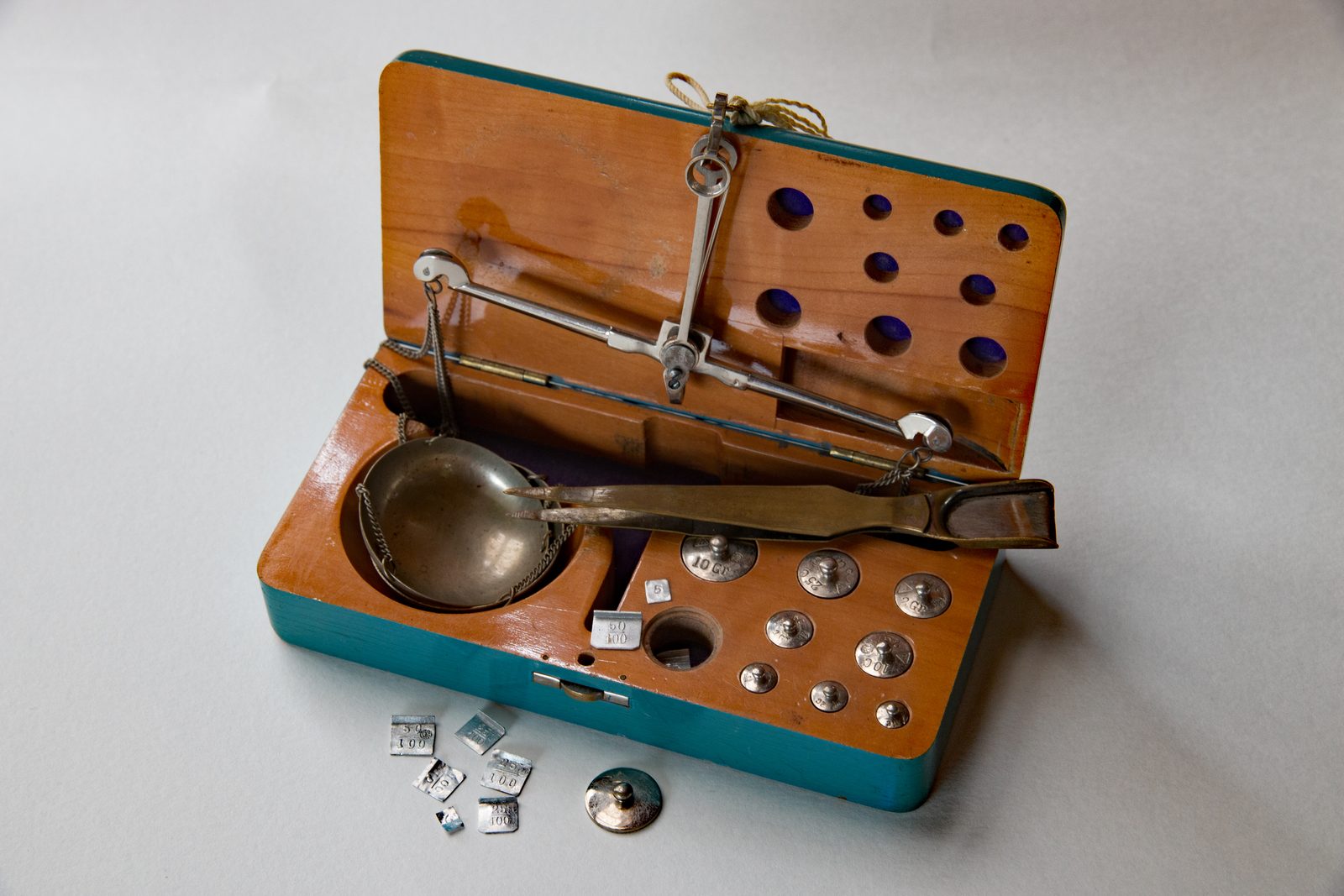
Then pull ten stones at random, not ten good ones, and grade them face down on a white tray under a daylight lamp against your own masters. If the sample sits a grade below the label, say so the same day. There is more on comparing color reliably in matching side stone color to the center stone.
Keep the parcel in its original paper with the supplier's description until the job is done. That paper is the record of what you were sold, and it is worth more than any note you write afterward. If you also need to know why the melee itself never carries a lab report, see GIA and IGI, the real-world split, and for the larger accent stones sitting just above melee weight, see how to size the taper. Live round stock, with measurements on every stone, is in the inventory.
Frequently asked questions
What size is 2 mm melee in carats?
A 2.00 mm round brilliant runs about 0.03 carats, so roughly 33 stones make a carat. The relationship follows the cube of the diameter, which is why a 1.30 mm stone is about 0.01 ct and a 2.90 mm stone is about 0.10 ct.
Why does melee look worse when it arrives than it did on memo?
Because a parcel is graded as a group and the group changes. Stones are pulled for other jobs, parcels get combined, and the description follows the paper rather than the contents. Add a different lighting environment at your bench and a parcel described as G to H can read I on arrival.
What is the difference between calibrated and assorted melee?
Assorted melee is sieved into a size band and sold that way. Calibrated melee is cut to a specific millimeter target and held within a tight tolerance, usually a few hundredths. Calibrated costs more per carat and is the only sensible choice for channel work or a pave row that has to sit level.
Do melee diamonds come with grading reports?
Almost never individually. The cost of grading exceeds the value of the stone below about 0.18 carats. Parcels come with a stated range from the supplier, and larger melee from about 0.20 carats up can carry its own report if you ask and pay for it.
Sources
- Photo: "Round Brilliant Cut Diamond" by Petragems, CC BY-SA 4.0, via Wikimedia Commons, resized
- Photo: "Diamond Balance Scale 0.01 - 25 Carats Jewelers Measuring Tool" by Sally V, CC BY-SA 4.0, via Wikimedia Commons, resized
- Photo: Pave setting in progress, Oracle Time
- Photo: Melee diamonds in a sorting sieve, F. Silverman Jewelers
Related reading


HV Diamonds is a wholesale loose diamond dealer in Los Angeles. Natural and lab-grown are kept as separate lines. Prices show on every stone once you are signed in, and an account is free.
Need something that is not on the list? Call the office at 213-612-0324 or send a quote request with the shape, the size band and the deadline.