
Matching side stone color to the center stone
One grade is the working tolerance, and whiter sides are worse than warmer ones. Why that is, and how to check a match before the stones are set.
Key takeaways
- Keep side stones within one color grade of the center, and treat two grades as a rebuild rather than a tolerance.
- Sides that are whiter than the center are the worse error, because the eye then reads the center as yellow.
- A small stone shows less body color than a large one at the same grade, so a matched letter is not a matched look.
- Step cut sides show body color more than brilliants, so a baguette or trapezoid needs a tighter tolerance than a round.
- Compare face down on a white non-brightened tray under a daylight lamp, in the metal color you are going to set in.

Color mismatches in a three stone ring are the complaint that arrives late. The piece looks fine on the bench under a task lamp, it looks fine at pickup, and then the customer stands near a window three weeks later and calls. Nearly all of it is preventable at the ordering stage.
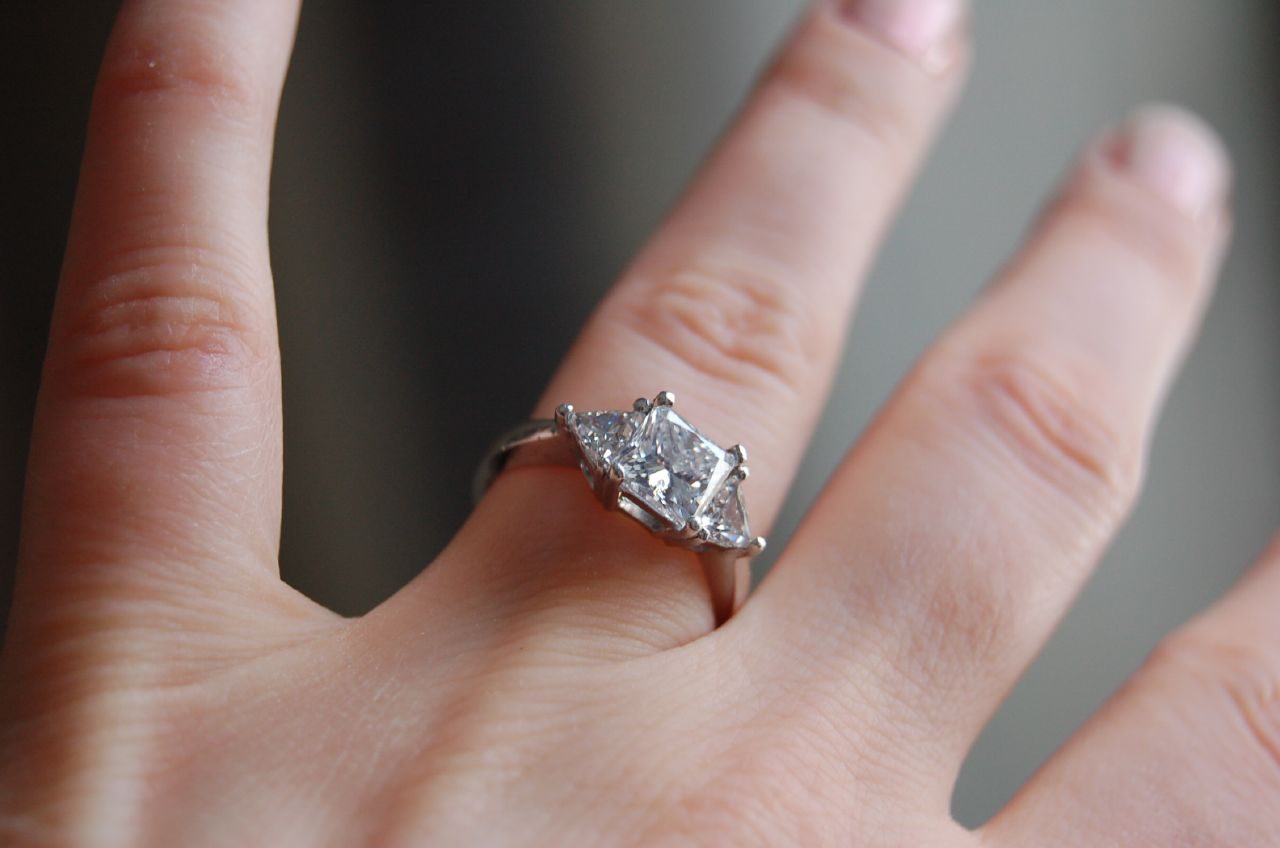
How close does side stone color have to be to the center?
Within one grade, and preferably not on the whiter side. The letters on the scale are ranges, so two stones one grade apart can be nearly identical or clearly different. Two grades apart is visible in the metal on almost every piece.
The direction of the error matters more than the size of it. Whiter sides do not lift the center. They give the eye a reference point, and the center loses the comparison every time.
| Center grade | Order sides at | Avoid |
|---|---|---|
| D to F | D to F | G and warmer, which shows immediately in platinum |
| G | G to H | D or E, which makes the center read yellow |
| H | G to I | Anything two grades either way |
| I to J | I to K | F and whiter |
| K to M | K to M, equal or a shade warmer | H and whiter, which makes a warm center look accidental |
Why do side stones read whiter than the center at the same grade?
Because a small stone gives body color less distance to show itself. Color grading measures the tint in the material, and tint shows in proportion to the path light takes through the stone. A short path shows less of the same color.
Cutting style pushes it the other way. A step cut has few large facets and a wide open table, so light takes a long clean run and the body color comes through. A brilliant chops the light into hundreds of short returns and hides tint.
Size works the same way inside one pair. A 0.30 carat half moon and a 0.12 carat baguette cut from the same rough will not look identical, because the larger one has more distance for the tint to show. When a design uses two different side stone sizes on the same ring, grade them against the center separately rather than against each other.
Put the two effects together and step cut sides are the awkward case. A trapezoid or a baguette graded H can read warmer than an H brilliant of the same size, so on step cut sides tighten the tolerance to the same grade rather than one either side.
Does the metal change how much difference you can carry?
Yes, by roughly a grade in either direction. Yellow and rose gold warm everything set in them, so a difference that would show in platinum disappears. White metal does the opposite and puts a cool reference right next to the stone.
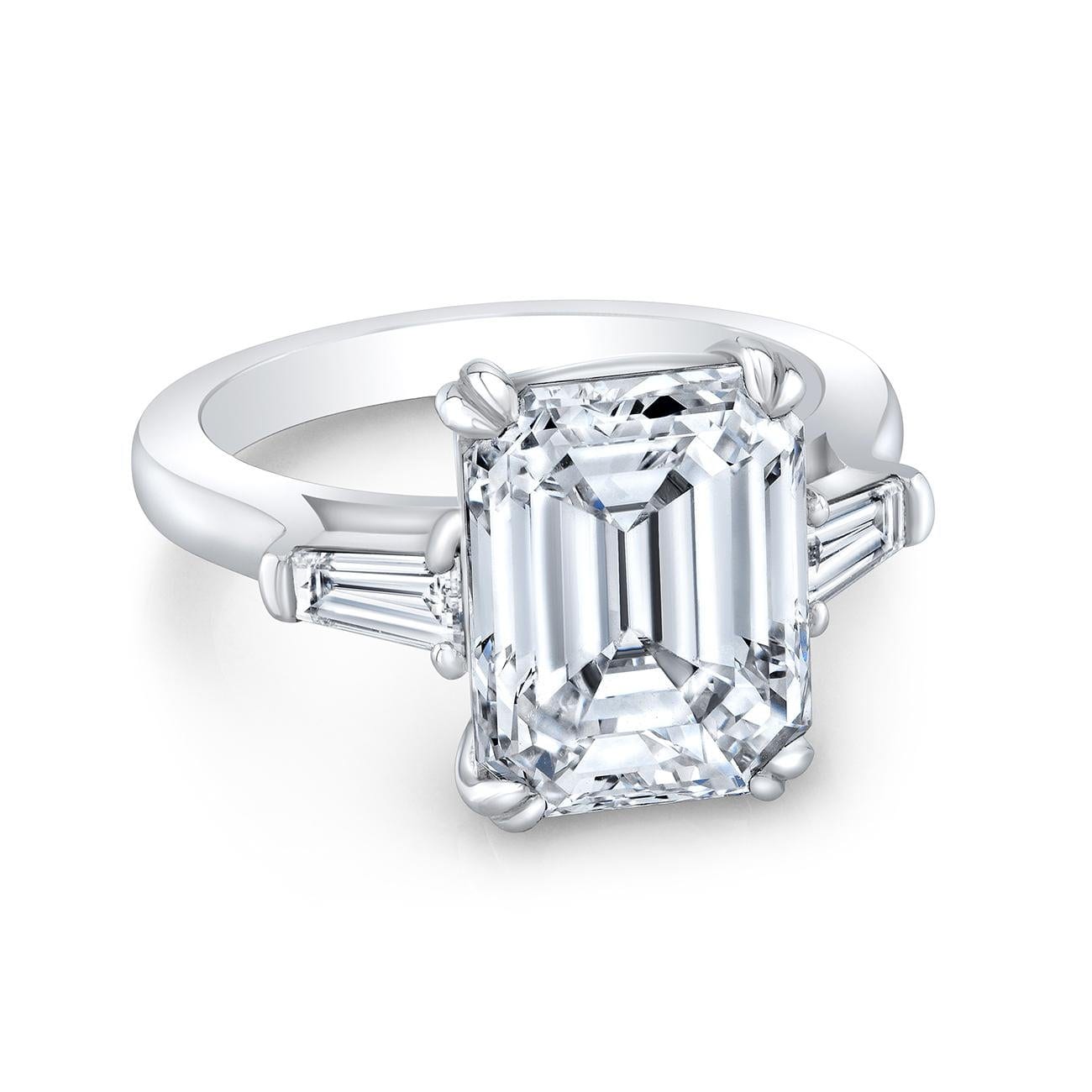
Head style matters too. A bezel wraps metal around the girdle and pushes its color into the stone, which is why a warm stone in yellow gold bezel reads warmer than the same stone in a four prong head.
The practical rule: pick the metal before you pick the sides, and compare loose stones on a scrap of that metal rather than on white paper alone.
Two tone pieces need the tightest tolerance of all. A yellow gold shank with a white gold head puts a warm reference and a cool reference on the same ring, and any color difference between the center and the sides gets caught by one of them. On two tone work, order the sides at the same grade as the center rather than one either side.
Do lab-grown and natural stones behave the same at the same grade?
They are graded on the same scale but they do not always look the same. Some grown material carries a faint grey or brown undertone that a letter grade does not capture, and it shows most in exactly the small step cuts used as side stones.
This is not an argument against lab-grown sides. It is an argument for viewing the actual stones next to the actual center rather than ordering on paper. Where the two lines are mixed in one piece, see mixing lab-grown and natural in one piece for what has to appear on the invoice.
The grading itself also comes from different places on each line, which is worth knowing before you compare two papers. GIA and IGI, the real-world split explains why grades do not transfer between labs.
How should you actually compare them?
Face down, on white, under a daylight lamp, next to a master set. Loose stones are graded face down because the table hides body color. Everything else about the setup is about removing variables you did not intend to introduce.
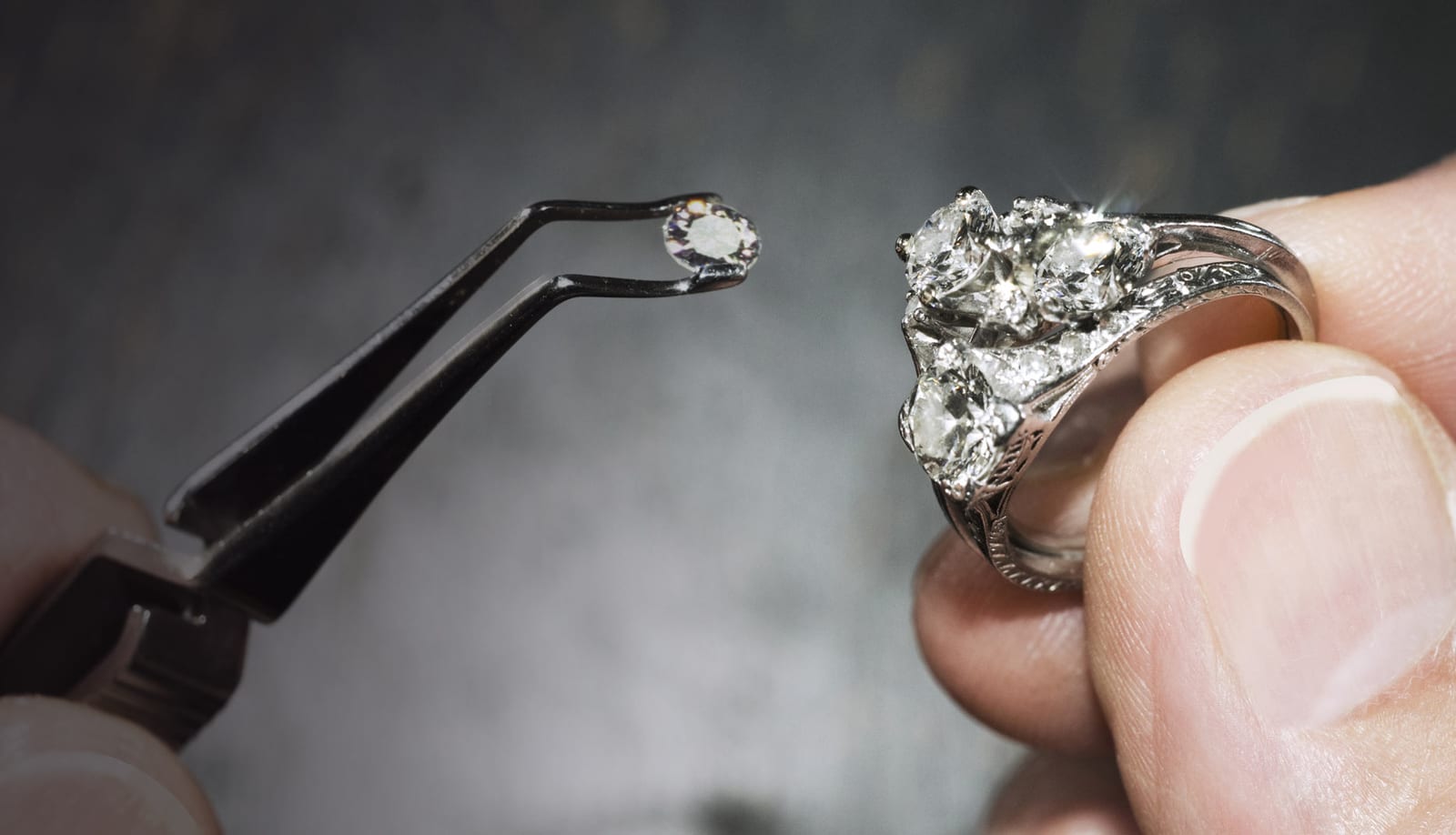
- Use a tray with no optical brightener. Bright white plastic and copy paper both fluoresce and will shift what you see.
- Use one light source, daylight balanced. A grading lamp sits in the range of roughly 5500 to 6500 kelvin. Turn the overheads off.
- Compare the sides to the center directly, not each of them to a master in turn. The pair only has to match one thing.
- Then look at them in the metal, face up, at arm's length, which is the distance the customer will judge from.
- Check fluorescence with a UV lamp before you set anything. Mixed fluorescence is the mismatch that only appears outdoors.
Do all of that before the setter touches the piece, because color is the one problem that cannot be fixed after the stones are in. If you are still choosing the sides, start with how to choose side stones, and if the sides are melee rather than a pair, how to spec melee so it matches covers parcel ranges. Live half moon, pear and emerald cut stock is in the inventory with the color grade on every stone.
Frequently asked questions
How many color grades apart can side stones be from the center?
One grade is the working tolerance, in either direction. Two grades is visible in the metal on most pieces, and it is most visible when the side stones are the whiter ones. On a warm center of K or below, keep the sides equal or slightly warmer rather than whiter.
Why do my side stones look whiter than the center at the same grade?
Because body color shows in proportion to how far light travels inside a stone. A 0.12 carat baguette graded G has a much shorter path than a 1.50 carat center graded G, so it shows less of the same tint. The letters agree; the appearance does not.
Does yellow gold let you get away with more difference?
Yes. Yellow and rose gold warm everything set in them and reliably hide about a grade of difference. Platinum and white gold do the opposite, showing warmth against a cool metal, so tighten the tolerance when you set white.
Can fluorescence ruin a match?
It can. A strong blue fluorescent side stone beside an inert center will look whiter outdoors and under UV rich lighting and normal indoors, so the piece changes as the wearer moves between rooms. Either match the fluorescence across all three stones or keep every stone at faint or none.
Sources
Related reading


HV Diamonds is a wholesale loose diamond dealer in Los Angeles. Natural and lab-grown are kept as separate lines. Prices show on every stone once you are signed in, and an account is free.
Need something that is not on the list? Call the office at 213-612-0324 or send a quote request with the shape, the size band and the deadline.