
How to choose side stones for an engagement ring
Tapered baguettes, trapezoids, half moons, bullets, pears or rounds. Which one belongs beside your center, how big it should be, and how close the color has to be.
Key takeaways
- Match the side stone family to the center: step cut sides beside step cut centers, curved sides beside curved centers, unless you are deliberately mixing.
- Size the pair by millimeter, not carat: the wide end of each side stone usually lands around 20 to 30 percent of the length of the center.
- Keep side stone color within one grade of the center, and never run the sides two grades whiter than a warm center.
- Clarity on sides can drop to a clean SI, but step cuts show inclusions through open tables, so ask for eye clean at 10x rather than a letter grade.
- Send the dealer the full measurement line of the center, the shank width and the metal color, or you will get a pair that fits nothing.

Side stones are where a three stone ring is won or lost. The center gets picked first and it usually picks itself, because the customer already has a shape and a budget in mind. Then somebody has to choose two small stones that sit beside it without looking like an afterthought, and that decision is mostly millimeters and tolerances rather than taste.
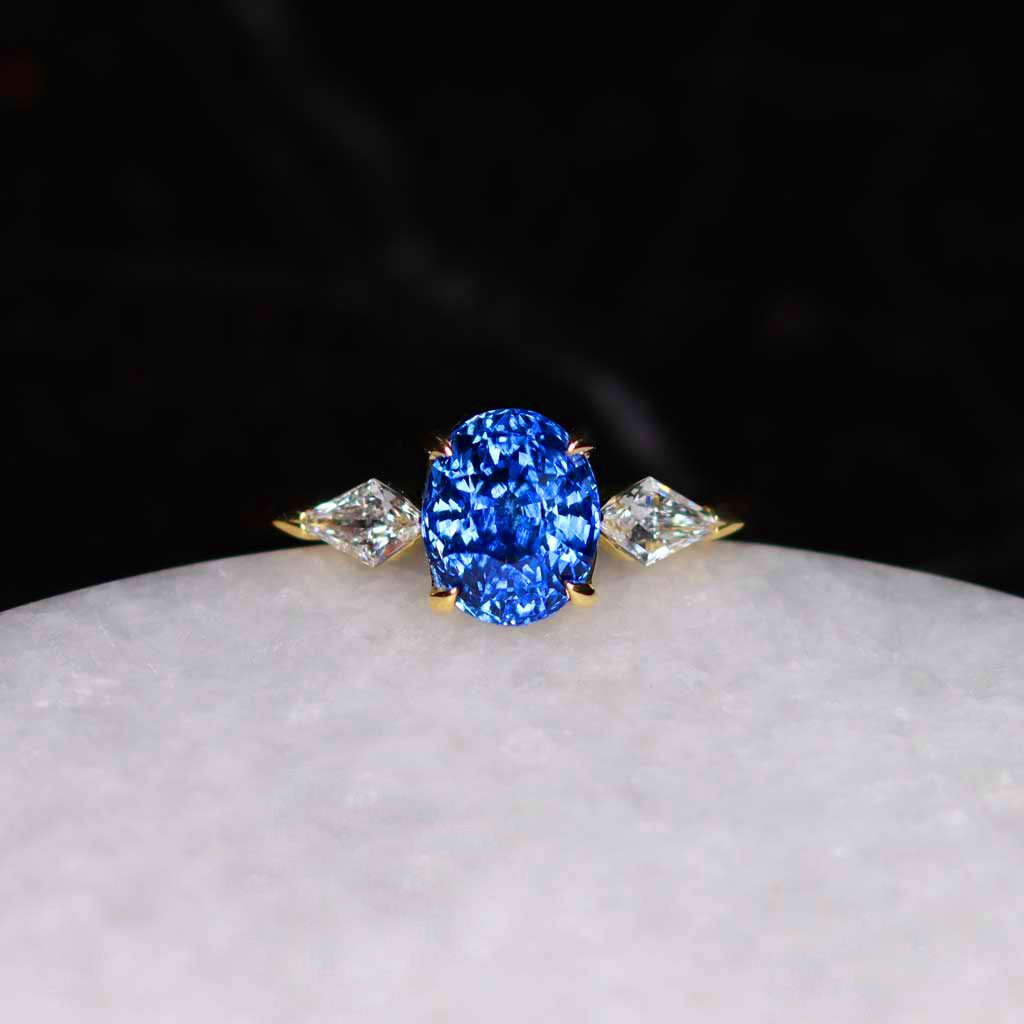
Which side stone shapes work beside which center?
Match the cutting family before you match the outline. Step cut sides such as baguettes, trapezoids and bullets sit naturally beside step cut centers like an emerald cut. Curved sides such as half moons and pears sit beside curved centers. Mixing the two families works, but only on purpose.
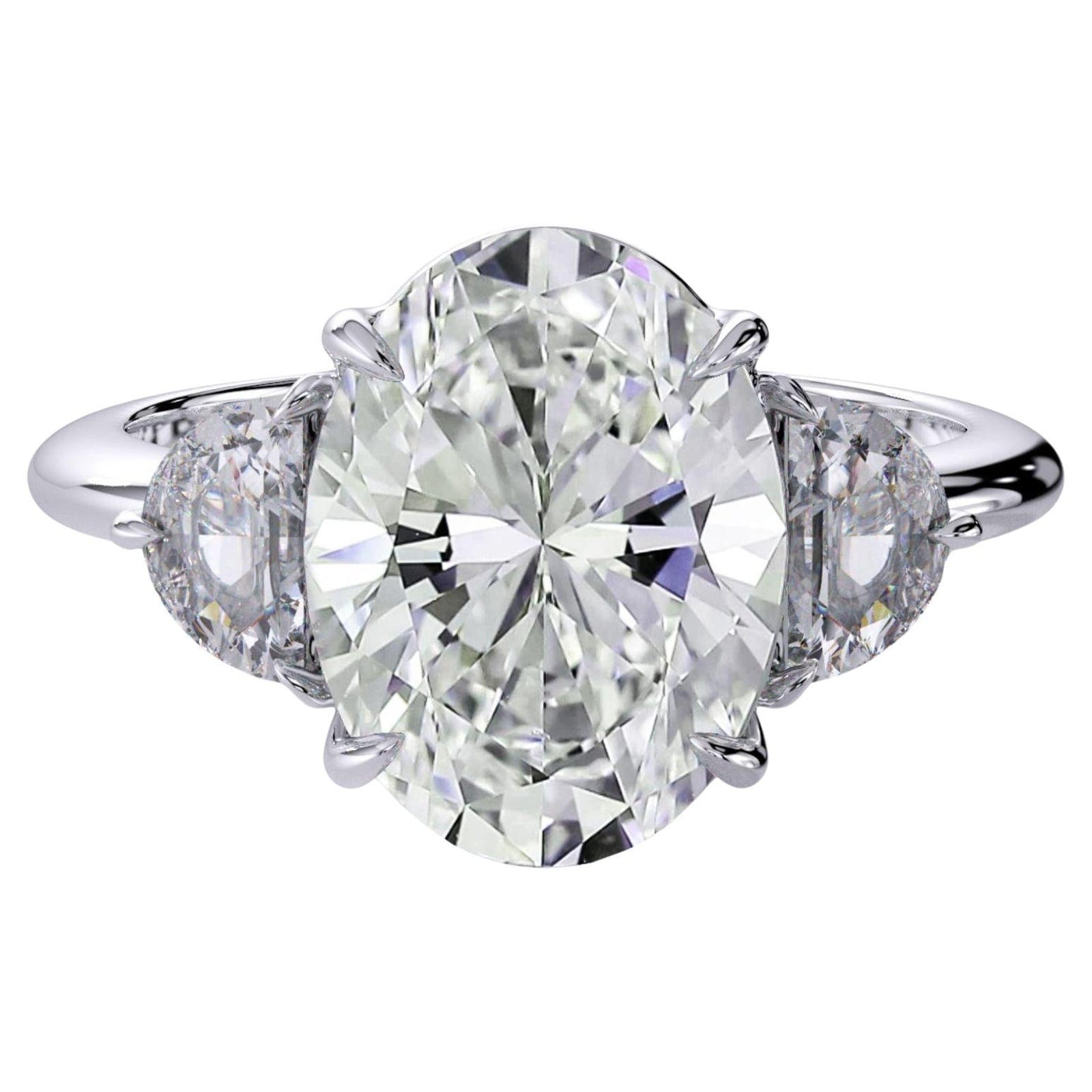
The practical shortlist is short. Six outlines cover almost everything that gets ordered, and each one has a center it flatters and a thing that goes wrong with it.
| Side shape | Sits well beside | Each, beside a 1.50 ct center | Watch for |
|---|---|---|---|
| Tapered baguette | Oval, emerald, radiant, round | 0.08 to 0.15 ct | Taper angle against the shank |
| Straight baguette | Emerald, asscher, long cushion | 0.08 to 0.15 ct | Lengths must match within 0.05 mm |
| Trapezoid | Radiant, princess, emerald, cushion | 0.15 to 0.30 ct | Long side has to equal the center's flank |
| Half moon | Oval, pear, round, cushion | 0.15 to 0.30 ct | The flat edge must follow the center's curve |
| Bullet | Emerald, radiant, long cushion | 0.10 to 0.20 ct | The tip is the first thing to chip |
| Pear | Oval, round, pear | 0.25 to 0.40 ct | Point orientation and prong coverage |
| Round | Anything | 0.10 to 0.25 ct | Reads generic, but replaces in a day |
| Kite | Emerald, hexagon, geometric work | 0.10 to 0.25 ct | Needs a true pair or the layout tilts |
How big should the side stones be?
Size the pair in millimeters against the center's length, not in carats. A useful starting point is a wide end that measures roughly 20 to 30 percent of the center's length. On an 8.50 mm oval that is about 1.7 to 2.5 mm across the wide end of each side stone.
Carat weight is a budgeting number, not a fitting number. Two baguettes that both weigh 0.12 ct can measure 4.0 by 2.0 mm and 4.6 by 1.8 mm, and only one of them will land where you want it on the shoulder.
Length matters second. A baguette or bullet normally runs about 40 to 55 percent of the center's length, so a 8.50 mm oval takes sides around 3.5 to 4.5 mm long. Go longer and the ring stops reading as a center with accents and starts reading as a row.
The last measurement is depth. A side stone deeper than the seat you can cut will either sit high or force the setter to thin the shank underneath it, and both of those come back.
How close does the side stone color have to be?
Within one grade of the center is the working tolerance. An F center takes F or G sides. A G center takes G or H. Two grades apart is visible in the metal, and it is most visible when the sides are the whiter pair, because whiter sides make the center read yellow.
Warm centers behave differently. On a K or L center, sides that are equal or a shade warmer keep the piece looking intentional. Sides two grades whiter make the same center look like a mistake.
Metal color moves the whole comparison. Yellow gold warms everything sitting in it and hides a grade of difference; platinum and white gold expose it. There is more on this, including how to compare stones under a daylight lamp, in matching side stone color to the center stone.
How much clarity can you give up on the sides?
Ask for eye clean at the size you are setting, not for a letter. A clean SI1 at 2 mm is invisible and costs a fraction of a VS. The rule is not the grade, it is whether the inclusion reads through the table once the stone is in the metal.
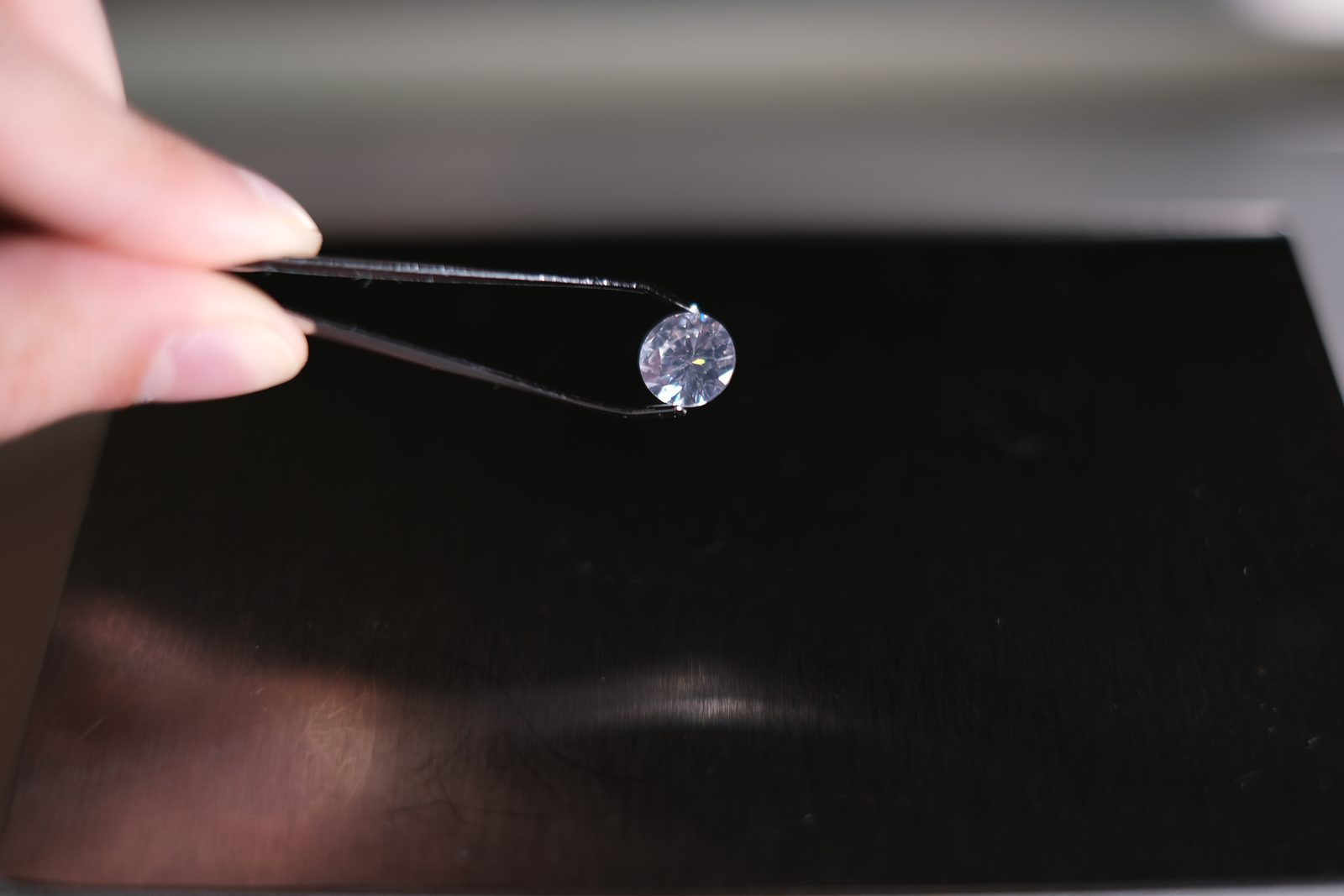
Step cuts are the exception that catches people. A baguette or trapezoid has a large open table and few facets to break up light, so a feather that would disappear in a brilliant sits there in plain view. On step cut sides, hold to VS2 or better, or insist on seeing the actual stones.
Also check the crystal, meaning the transparency, not the grade. A hazy SI reads milky beside a bright center in a way that no report field will warn you about.
When does it make sense to use lab-grown side stones?
When the sides are calibrated and the savings are real. Matched calibrated pairs in natural goods carry a premium because the cutter had to make two stones agree. In lab-grown, that matching is cheaper to produce, so a pair of 4.0 mm tapered baguettes can cost a small fraction of the natural equivalent.
The catch is that it has to be disclosed, on the tag and on the invoice, and the two lines have to stay separate all the way through. We cover exactly how that is written up in mixing lab-grown and natural in one piece.
What should you send the dealer when you order a layout?
Send the center's measurements, the shank width and the metal. Those three things let a dealer pull real stones instead of guessing. Everything else on the list below narrows the search, but without those three nobody can start.
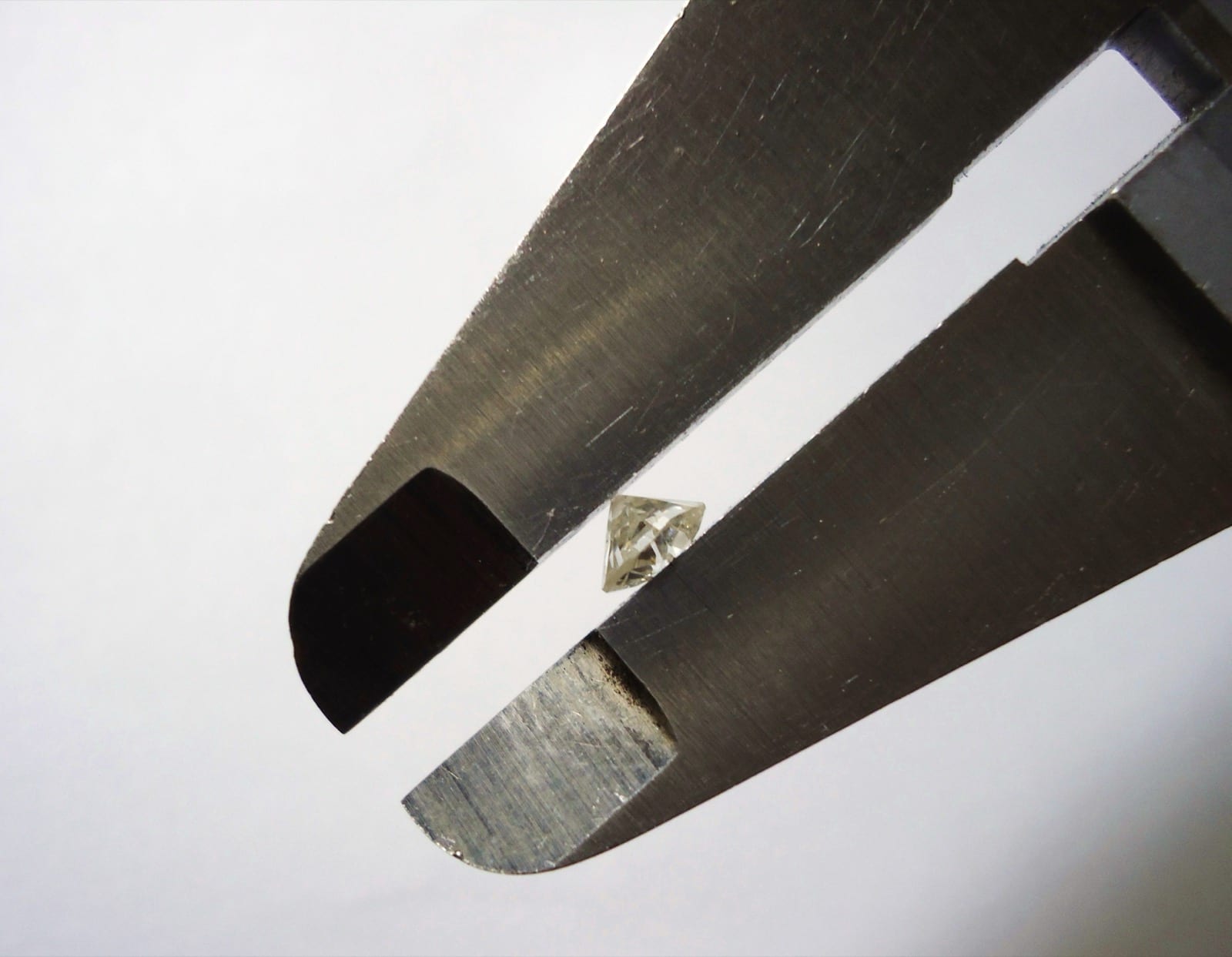
- The center's full measurement line, length by width by depth, straight off the report.
- The side stone shape, and the wide end width you want in millimeters.
- A color floor and a clarity floor for the sides, not a target.
- Shank width at the shoulder, so the taper can be matched to it.
- Metal color, since that decides how much color difference you can carry.
- Whether you need a true matched pair or two stones that are simply close.
The difference between a pair and two similar stones is real money and real waiting, and it is worth knowing which one you are asking for. Start with how diamond matched pairs are matched, then read how to size the taper before you order baguettes. If you are still settling the center itself, how to pick a center stone size comes first, and length to width ratios will tell you which outline you are actually asking for. Live stock, with measurements on every stone, is in the inventory.
Frequently asked questions
How much should side stones weigh next to a 1.50 carat center?
Total side weight usually lands between 20 and 30 percent of the center, so roughly 0.30 to 0.45 carats for the pair. Tapered baguettes run at the light end, around 0.10 to 0.15 carats each. Pears and half moons run heavier, 0.20 to 0.35 carats each. Weight is a budgeting number; the millimeter fit is what decides the look.
Can side stones be a different color grade than the center?
Yes, within about one grade. A G center takes G or H sides without anyone noticing. Two grades apart shows, and it shows worst when the sides are whiter than the center, because that pushes the eye to read the center as yellow.
Do side stones need their own grading reports?
Rarely. Stones under about 0.30 carats are normally sold on a parcel or pair basis with a stated color and clarity range rather than a report per stone. Ask for measurements in writing for every side stone, since that is the number your setter needs and no report will be there to supply it.
Which side stone shape is the most forgiving to set?
Rounds, by a wide margin. They have no points, no flat edge that has to meet a curve, and a replacement is available in minutes if one chips. Bullets and kites are the least forgiving, because the tip sits proud and takes the first knock.
Sources
- Photo: "Vera oval Ceylon blue sapphire diamond kite gold engagement ring" by Mliz2000, CC BY 4.0, via Wikimedia Commons, resized
- Photo: "Diamante con pinzas sobre fondo oscuro" by Davidmimay, CC BY 4.0, via Wikimedia Commons, resized
- Photo: "Measuring a diamond" by Mauro Cateb, CC BY-SA 3.0, via Wikimedia Commons, resized
- Photo: GIA 4.02 carat oval diamond three stone ring with half moon side stones, 1stDibs
Related reading


HV Diamonds is a wholesale loose diamond dealer in Los Angeles. Natural and lab-grown are kept as separate lines. Prices show on every stone once you are signed in, and an account is free.
Need something that is not on the list? Call the office at 213-612-0324 or send a quote request with the shape, the size band and the deadline.