
How to pick a center stone size
A carat is a weight, not a size. Here are the millimeter numbers by shape, what changes between a size 5 and a size 8 finger, and where the money is best spent.
Key takeaways
- Order by millimeter and confirm the carat second, because two stones of the same weight can differ by more than a millimeter in face-up length.
- Elongated shapes spread furthest for the weight: a 1.00 carat marquise is about 10.5 mm long, a 1.00 carat princess about 5.5 mm.
- Finger size changes the read: the same 1.00 carat oval covers roughly 33 percent of a size 5 finger and 29 percent of a size 8.
- A shank under 2.0 mm makes the center look larger; a 2.5 to 3.0 mm shank competes with it.
- When the budget is fixed, buy the millimeters and give up one color grade before you give up a tenth of a carat.

Every jeweler has had the conversation where a customer says a carat and means a look. The two are not the same thing, and the gap between them is where returns come from. Getting the size right is a millimeter exercise with three inputs: the shape, the finger, and what the ring puts next to the stone.
How many millimeters is a one carat diamond?
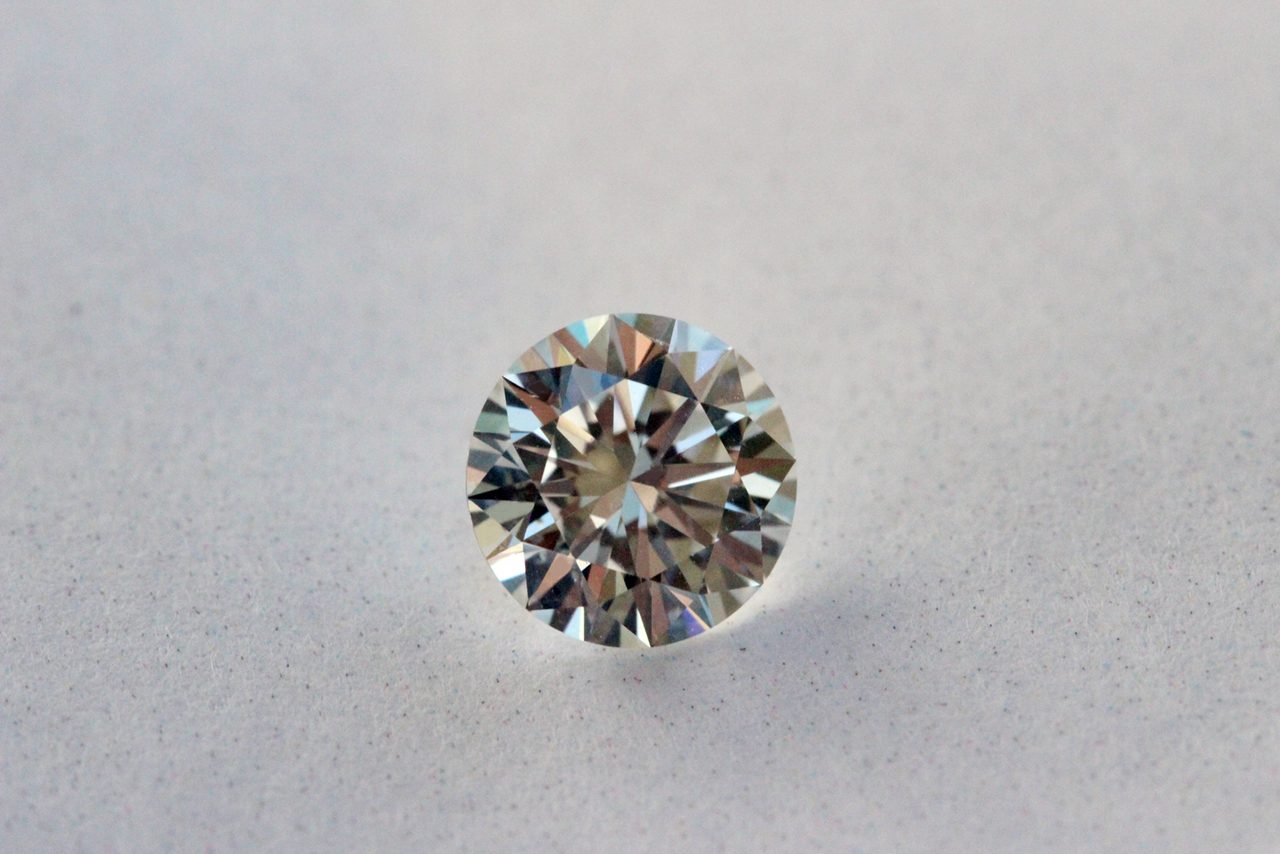
Between 5.5 and 10.5 mm, depending entirely on the shape. Carat is weight. Two stones can both weigh 1.00 and differ by five millimeters in length, because the pavilion decides how much of that weight sits under the girdle where nobody looks.
These are the working numbers the trade quotes at 1.00 carat. Treat them as centers of a band, since a shallow stone runs a few tenths larger and a deep one a few tenths smaller.
| Shape | About 1.00 ct | How it reads |
|---|---|---|
| Round | 6.4 mm | The benchmark everything else is judged against |
| Princess | 5.5 x 5.5 mm | Smallest face up per carat, corners cover the finger |
| Cushion, square | 5.8 x 5.8 mm | Soft outline reads slightly smaller than it measures |
| Emerald cut | 7.0 x 5.0 mm | Long and calm, the open table exaggerates length |
| Radiant, elongated | 7.0 x 5.0 mm | Same footprint as an emerald with more return |
| Oval | 7.7 x 5.2 mm | The default when a customer says she wants it to look bigger |
| Pear | 8.5 x 5.5 mm | Longest read that still works in a solitaire |
| Marquise | 10.5 x 5.2 mm | Covers the most finger per carat by a clear margin |
Which shapes look biggest for the weight?
The elongated ones, in this order: marquise, pear, oval. All three push weight into length, so the face-up footprint per carat is the largest available. Square shapes with deep pavilions sit at the other end and always will.
Spread is not only a shape question. Inside one shape, depth percentage decides how much of the weight shows. Two 1.50 carat ovals at 62 percent and 70 percent depth can differ by half a millimeter of length, and the shallower one is the better buy for a customer who is counting millimeters.
The ratio you order sets the same thing from a different direction. A 1.30 oval and a 1.50 oval at the same weight read as different stones on the hand. Length to width ratios covers the bands the trade actually stocks, which is where you have real choice.
How does finger size change what the same stone looks like?
By roughly four percentage points of coverage between a size 5 and a size 8. A US size 5 has an inside diameter of about 15.7 mm and a size 8 about 18.1 mm. The stone stays the same; the thing it is measured against grows.
That difference sounds small written down and looks large on a hand. It is the single most common reason a customer says her ring looks smaller than the one she saw in the store, and it is entirely predictable before you order.
The practical move is to size the stone to the finger rather than to the number. On a size 7.5 and up, add roughly 10 to 15 percent of weight, or move to a longer shape, to hold the same visual footprint you would get on a size 5.
Does a wide band make a center stone look smaller?
Yes, and it is the cheapest size adjustment you can make. The eye judges the stone against whatever sits next to it. A shank of 1.6 to 2.0 mm at the head makes a center read larger; 2.5 to 3.0 mm makes the same stone read smaller.
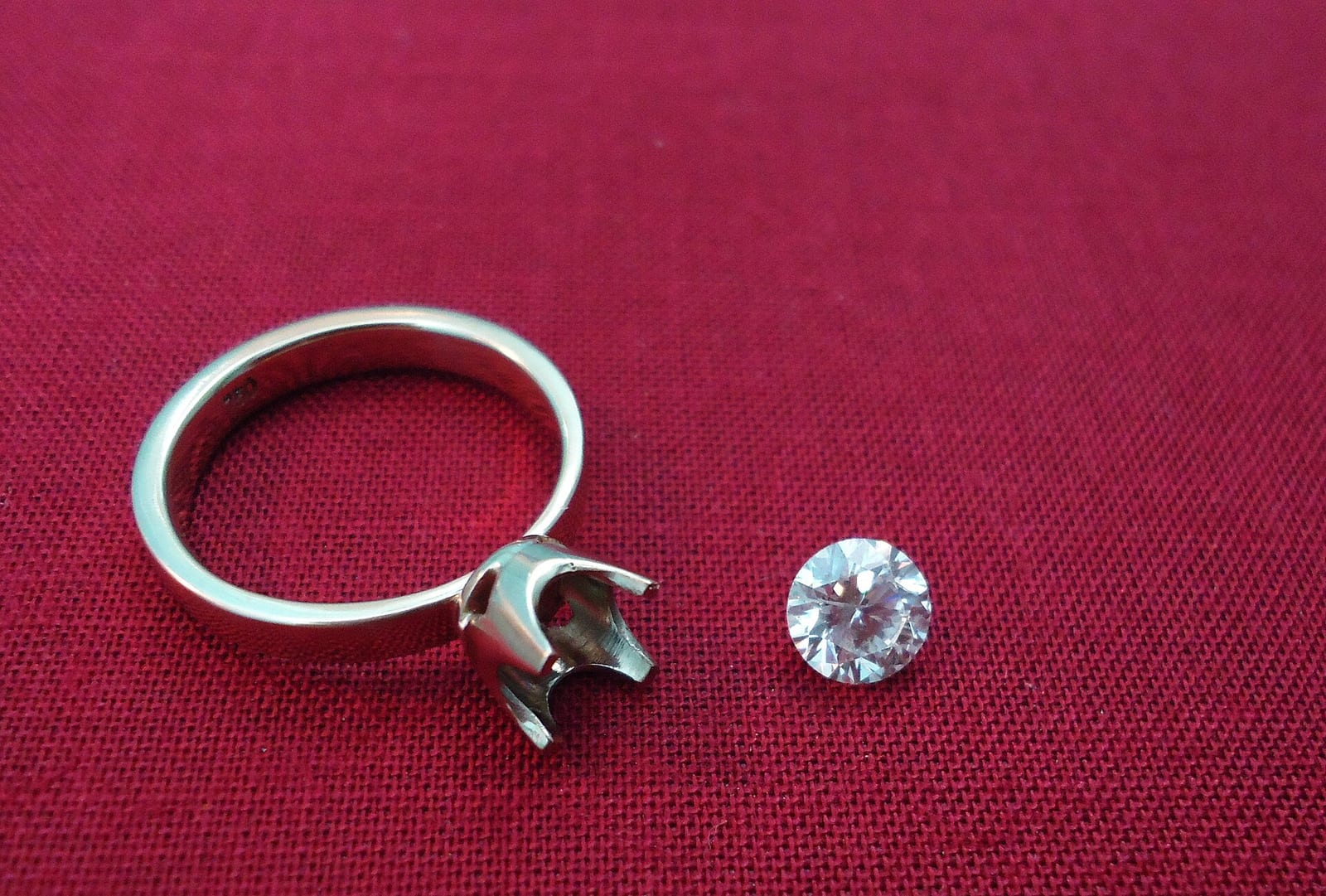
Head style does the same work. A thin four prong basket shows more girdle outline than a heavy six prong, and a bezel closes down the visible outline by the width of the metal all the way around.
Side stones cut both ways. A pair of tapered baguettes on a narrow shank extends the whole top of the ring and makes a modest center read larger; a chunky halo makes an elongated center read shorter. How to choose side stones goes through the millimeter relationships.
What should you trade away first when the budget is fixed?
Give up a color grade before you give up a tenth of a carat. Nobody has ever noticed a G against an H across a table. Everybody notices a 1.80 where they wanted a 2.00, because that difference is a third of a millimeter of length they can measure.
Here is the order that holds up most of the time.
- Buy just under a break point. Prices step at the round weights, so a 0.92 or a 1.90 buys noticeably more millimeter per dollar than a 1.00 or a 2.00. How wholesale diamond pricing works has the mechanics.
- Drop one color grade. G to H, or H to I in yellow gold, where the metal does the work for you.
- Drop clarity to a clean VS2 or an eye clean SI1. Read the plot and look at the video rather than trusting the letter.
- Then, and only then, drop weight. This is the one the customer will see on the hand every day.
One thing not to trade is transparency. A hazy stone at any grade looks worse than a clean stone two grades down, and no amount of size compensates for it.
What do you send the dealer?
Send a millimeter target and a weight band, in that order. Say the length and width you need, then the weight range you can live in. That is a search a dealer can run in minutes, where a bare carat number is not.
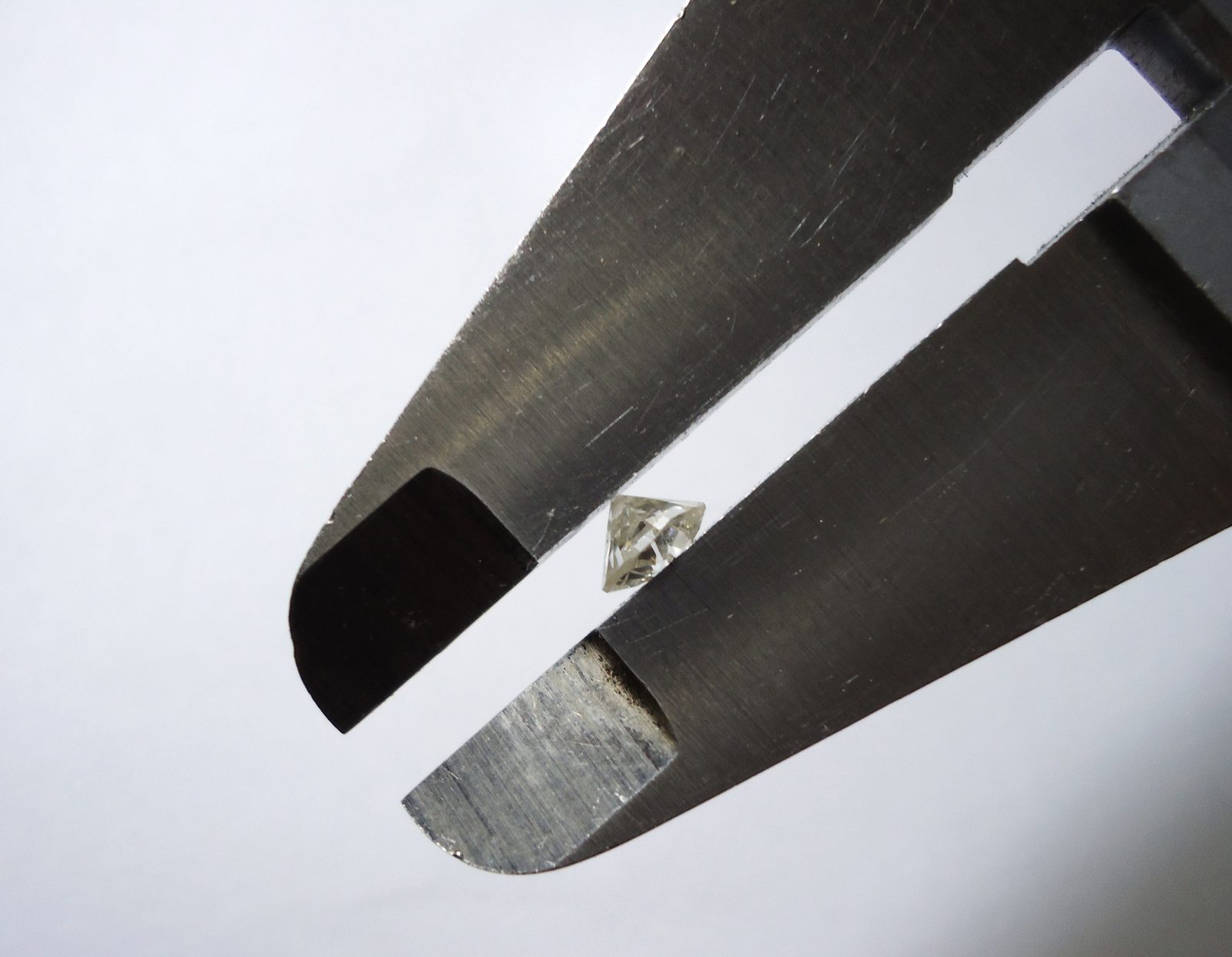
Add the finger size, the shank width, and whether there are side stones, because all three change what the right answer is. If the layout is calibrated, read reading a diamond report for calibrated layouts before you commit, and check the numbers against live stones in the inventory.
Frequently asked questions
How many millimeters is a 1 carat diamond?
It depends on the shape. A 1.00 carat round runs about 6.4 mm across, an oval about 7.7 by 5.2 mm, an emerald cut about 7.0 by 5.0 mm, a princess about 5.5 mm square, and a marquise about 10.5 by 5.2 mm. Cut depth moves each of those by a few tenths in either direction.
Which diamond shape looks the biggest for its weight?
Marquise, then pear, then oval. All three carry their weight along the length, so they cover more finger per carat than a round. Princess, asscher and square cushion sit at the other end, since a deeper pavilion holds weight below the girdle where nobody sees it.
Should I buy just under a carat to save money?
Often yes. Prices step up at the round weights, so a 0.90 to 0.98 carat stone can cost noticeably less per carat than a 1.00, and the diameter difference is around a tenth of a millimeter. The saving is real; the visible difference is not.
Does a thinner band really make the stone look bigger?
Yes, because the eye reads the stone against whatever sits next to it. Dropping a shank from 2.6 mm to 1.8 mm at the head adds nothing to the diamond but changes the comparison the eye is making. It is the cheapest size upgrade available.
Sources
Related reading


HV Diamonds is a wholesale loose diamond dealer in Los Angeles. Natural and lab-grown are kept as separate lines. Prices show on every stone once you are signed in, and an account is free.
Need something that is not on the list? Call the office at 213-612-0324 or send a quote request with the shape, the size band and the deadline.