
Reading a diamond report for calibrated layouts
A grading report is a quality document that happens to contain four fitting numbers. Here is how to pull them out and pre-check a layout before you order.
Key takeaways
- Four fields do the fitting work: measurements, table percentage, depth percentage and girdle description.
- On a fancy shape the measurements line reads length by width by depth; on a round it reads minimum to maximum diameter by depth.
- Add the center, both side stones and two metal gaps of roughly 0.15 to 0.20 mm before ordering, and compare the total to the finger.
- An extremely thin girdle is a setting risk and an extremely thick one eats spread, so read that line before you commit to a calibrated pair.
- No report describes the outline character, the taper of a side stone or whether two stones match, so video and measurements from the dealer still do that work.

A grading report is written for a buyer deciding what a stone is worth. A calibrated layout needs something else entirely: whether these three stones will physically sit together on a particular finger. The report answers that too, but only if you know which four lines to read and which ones to ignore.
Which fields on a report actually matter for a layout?
Measurements, table percentage, depth percentage and the girdle line. Color, clarity and the plot decide price and how the stone looks. Those four decide whether the piece can be built as drawn.
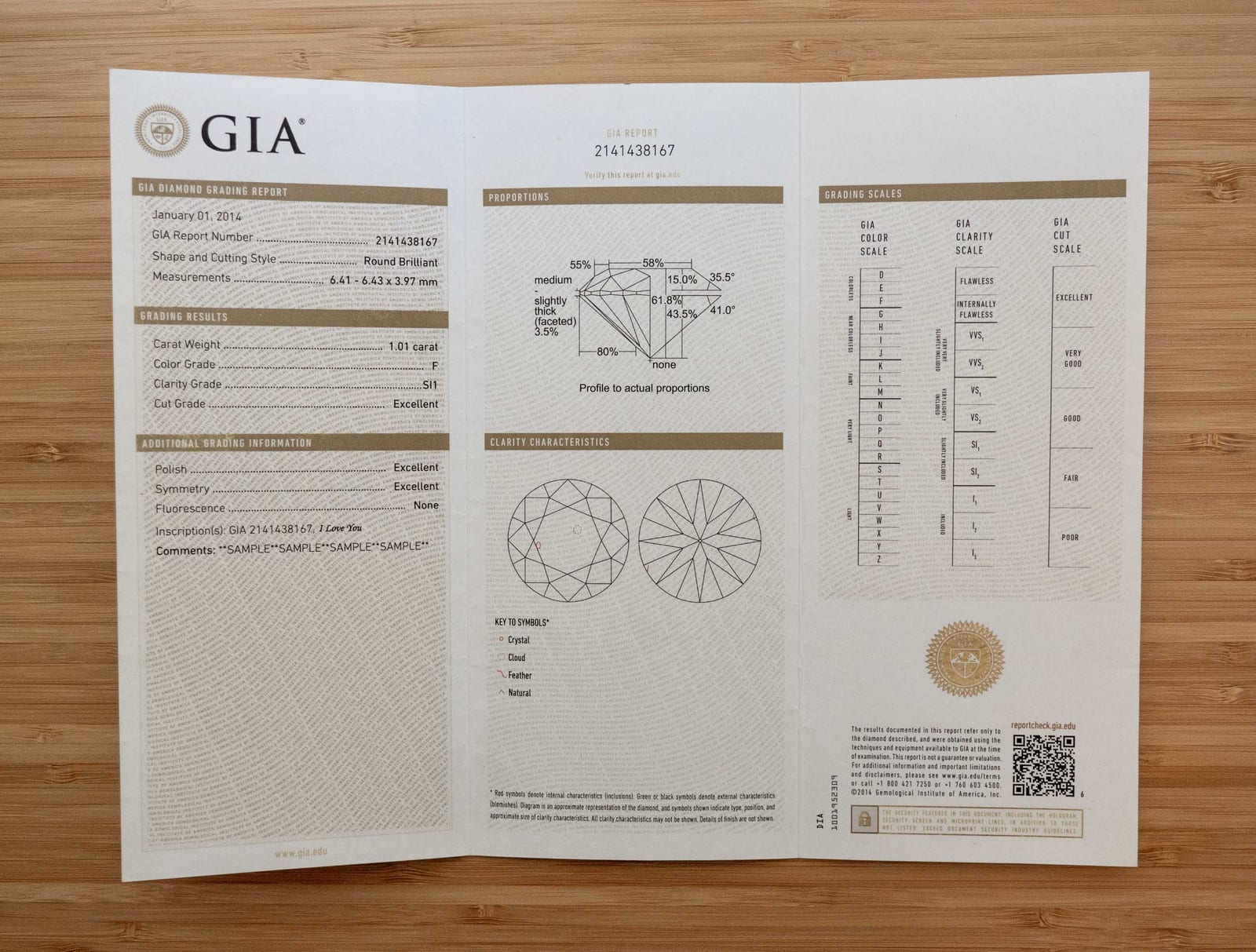
Everything else is useful in another conversation. Polish and symmetry tell you about finish quality; fluorescence matters when you are matching a set; the comments section is where treatments are disclosed and it should always be read. None of them changes the seat you cut.
How do you read the measurements line?
Left to right: length, width, depth on a fancy shape. A line reading 8.51 by 6.02 by 3.85 mm means the stone is 8.51 mm long, 6.02 mm wide and 3.85 mm deep. Those are the only outline numbers you get.
A round brilliant reads differently. It is written as a minimum and a maximum diameter followed by depth, for example 6.42 to 6.45 by 3.97 mm, because no round is perfectly circular. Use the average of the two diameters when you are calculating a fit.
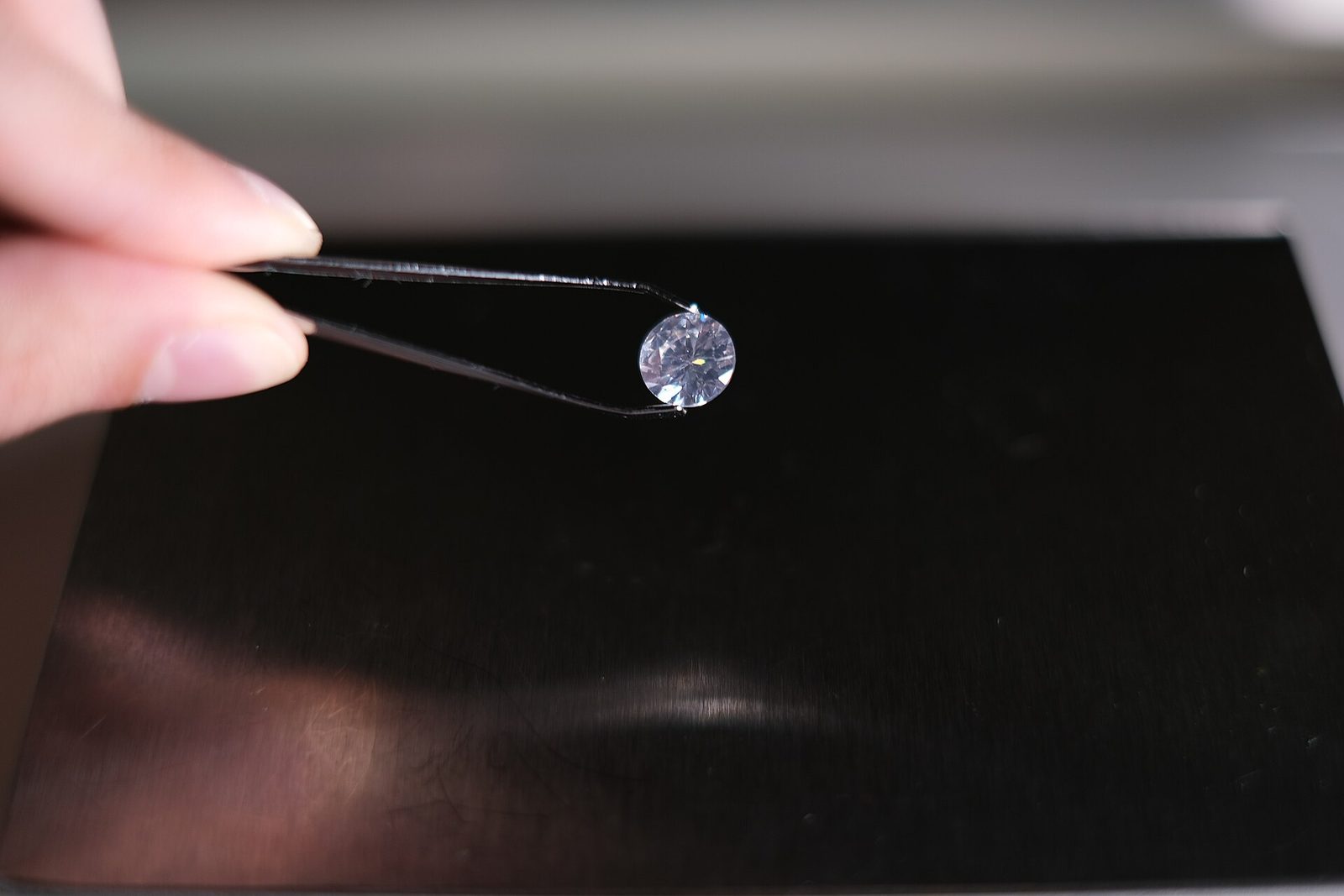
Depth is the number people skip and the setter cares about most. It decides how far the pavilion drops below the seat, which decides how much metal is left under the stone and whether the point sits against the finger.
How do you pre-check a calibrated layout?
Add the stones and the gaps and compare the total to the finger. Center length, plus both side stone lengths, plus two metal gaps of roughly 0.15 to 0.20 mm. That total is the top length of the ring, and it is knowable before anything ships.
Do the same across the width. The center width plus the side stone wide end widths tells you how far the shoulder has to spread, and whether the head will overhang the shank.
Then check depths against each other. A side stone deeper than the center forces the setter to drop the sides lower or raise the center, and either choice shows in profile. Side stone proportions get their own treatment in how to size the taper.
| Report field | What it tells you | What it does not |
|---|---|---|
| Measurements | Exact footprint and depth | Whether the shoulders are full or pinched |
| Table percent | How much of the face is open table | How the stone returns light |
| Depth percent | Whether weight is spread or hidden below | Whether there is a bow tie |
| Girdle | Whether there is an edge to grip | Where the girdle thickens around the outline |
| Polish and symmetry | Finish quality | Whether two stones match each other |
| Clarity plot | Where the inclusions sit | Whether the stone is transparent or hazy |
Why does the girdle line decide whether a stone can be set?
Because the girdle is what the metal actually holds. A girdle described as extremely thin gives the setter almost nothing to grip and chips under a prong. An extremely thick girdle grips fine but hides weight in a rim nobody sees.
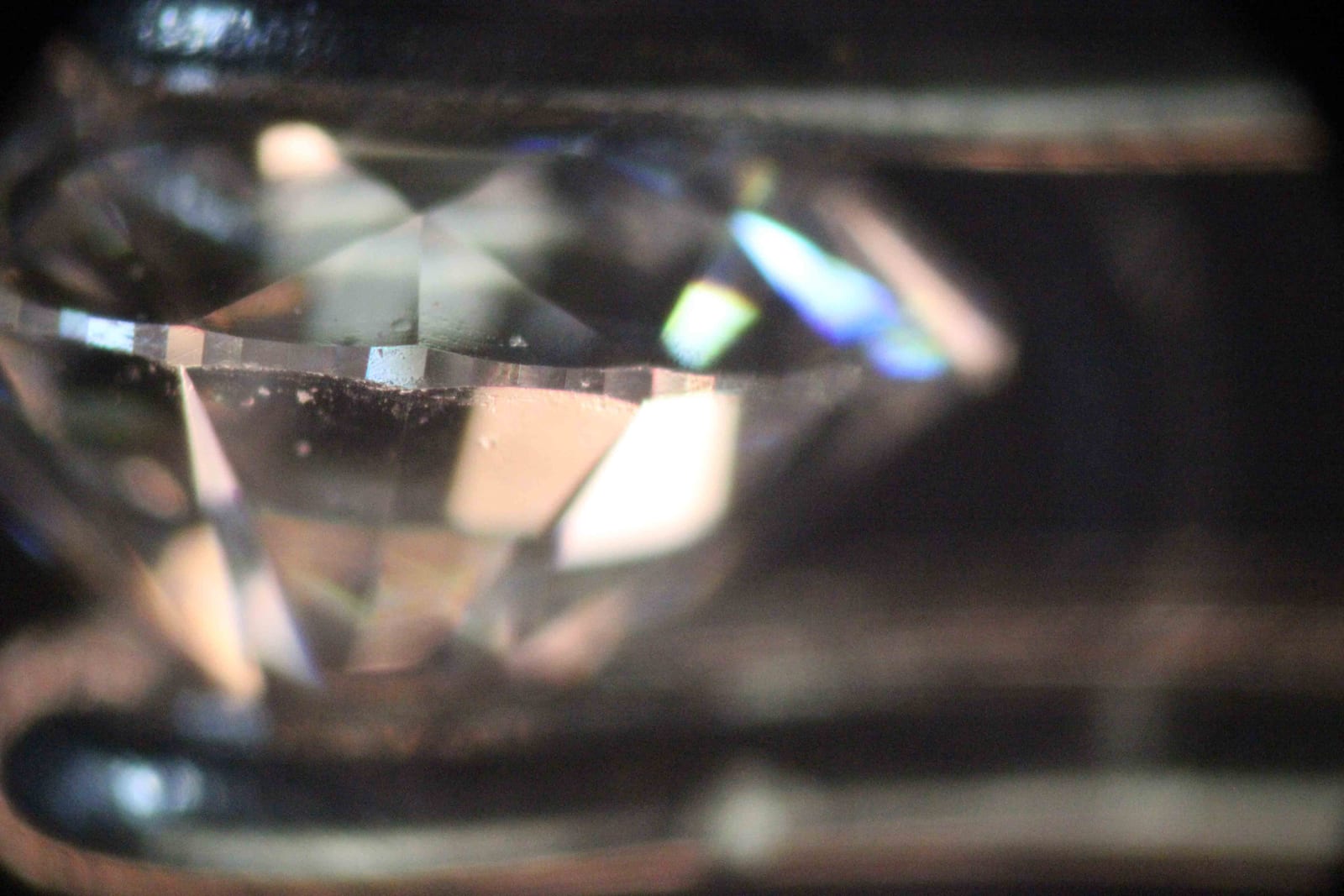
The comfortable range for setting work is thin to slightly thick. Faceted and polished girdles both set well. A bruted girdle is fine but reads slightly grey along the edge on a very white stone.
On fancy shapes, read the girdle description as a range rather than a single value, because the girdle thickness varies around the outline. The thin part is normally at the points, which is exactly where a pear or a marquise gets knocked.
What does the report not tell you?
The outline character, the match, the transparency and the taper. Those four are the difference between a stone that fits on paper and a piece that looks right, and none of them appears on any laboratory report.
Outline character means full or lean shoulders, a wide or narrow belly, the shape of the wings on a pear. Two stones with identical measurements can differ visibly. Length to width ratios covers why the ratio alone does not settle it.
Matching is a dealer function done by eye, and it is covered in how diamond matched pairs are matched. Transparency is not a graded property at all: a hazy SI and a bright SI carry the same letter. And a tapered side stone has two widths where the report prints one.
Do GIA and IGI reports carry the same fields?
Nearly, with cut grade as the real difference. Both give measurements, carat, color, clarity, polish, symmetry, fluorescence, girdle, culet, a plot and comments. GIA issues a cut grade on round brilliants only; IGI issues one on rounds and on a number of fancy shapes.
Which lab you are handed is mostly decided by whether the stone is natural or grown, and GIA and IGI, the real-world split explains why. For fitting purposes it does not matter: the measurements line means the same thing on both.
Whichever report you have, pull it from the laboratory's own verification page rather than trusting an emailed file, and check the numbers against the stone. Then compare them against live stock, since every stone in the inventory lists its measurements, from rounds to emerald cuts to radiants. If you are still choosing the layout, how to choose side stones comes first.
Frequently asked questions
What does the measurements line on a diamond report mean?
On a fancy shape it is length by width by depth in millimeters, such as 8.51 by 6.02 by 3.85. On a round brilliant it is minimum diameter to maximum diameter by depth, because a round is never perfectly circular. Those are the only outline numbers a report gives you.
Is depth percentage calculated the same way on every shape?
No. On a round brilliant, depth percentage is the depth divided by the average girdle diameter. On a fancy shape it is the depth divided by the width. That is why a 70 percent depth reads as deep on a round and as unremarkable on some fancy shapes.
Does a grading report say whether two stones match?
No. A report describes one stone. Two stones with identical grades and near identical measurements can still differ in outline, faceting style and transparency. Matching is a dealer function, done by eye with the stones side by side, and no paperwork substitutes for it.
Do GIA and IGI reports carry the same fields?
Broadly yes: measurements, carat, color, clarity, polish, symmetry, fluorescence, girdle, culet, a clarity plot and comments. The main difference is cut grade. GIA issues one for round brilliants only. IGI issues cut grades for rounds and for a number of fancy shapes as well.
Sources
- GIA Report Check
- IGI, verify your report
- Photo: "Diamante con pinzas sobre fondo oscuro" by Davidmimay, CC BY 4.0, via Wikimedia Commons, resized
- Photo: "A jeweller's loupe" by Billjones94, CC BY-SA 4.0, via Wikimedia Commons, resized
- Photo: The girdle of a faceted diamond, Gem-A Archives
- Photo: Sample GIA diamond grading report, The Modest Man
Related reading


HV Diamonds is a wholesale loose diamond dealer in Los Angeles. Natural and lab-grown are kept as separate lines. Prices show on every stone once you are signed in, and an account is free.
Need something that is not on the list? Call the office at 213-612-0324 or send a quote request with the shape, the size band and the deadline.